


A summary of the slides presented by our Clinical Operations Manager, Stephanie Wallace, at our ‘ADHD Medication in Adulthood: Finding the Right Fit’ webinar held on 4 March.
If you missed the webinar, you can watch the recording here.
After an ADHD diagnosis – what happens next?
Getting an ADHD diagnosis can bring a lot of mixed feelings. You may feel relieved, hopeful, worried, overwhelmed or unsure what to do next. There is a lot of information online and it can be difficult to know what is reliable.
The key message is that ADHD medication does not cure ADHD, but it can help reduce symptoms and make daily life easier.
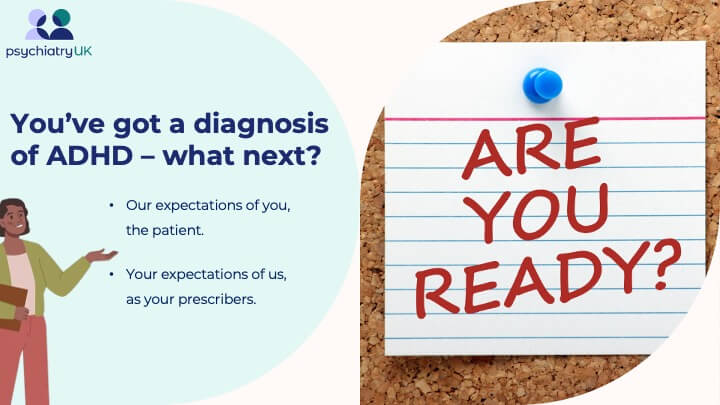
Common worries about ADHD medication
Some common questions many people ask before starting treatment:
- Will medication change my personality?
- Will I lose my creativity?
- Will I feel numb or ‘like a zombie’?
- Can I stop medication if I want to?
- Do I have to take it every day?
- Can I drink alcohol and still have a social life?
These worries are very common and valid, and they should be discussed with your prescriber.
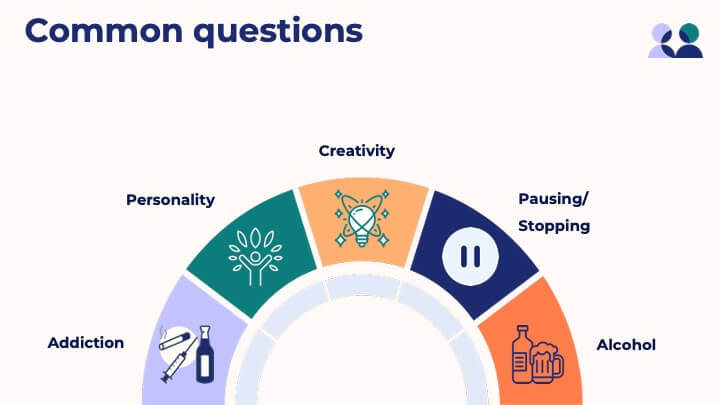
Getting ready for titration
Before starting medication, it helps if your physical health is in a stable place.
This does not mean you need to be perfect or ‘super healthy’. It means that your body needs to be ready to cope with medication safely. ADHD medication can affect heart rate and blood pressure, so your team needs to understand your overall health before treatment begins.
Why physical health matters
It’s important to have a healthy body weight and good general health.
For example, if you are underweight or not eating well, medication may make you feel more jittery, faint or unwell. The aim is to reduce side effects and avoid putting your body under too much strain during titration.
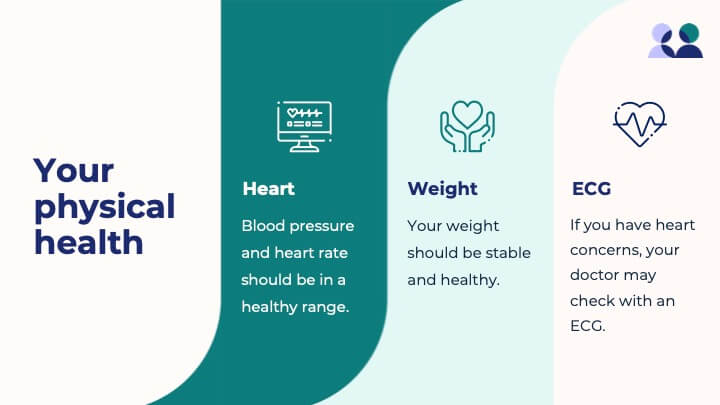
Other medication and medical history
It’s important to let your prescriber know about:
- Your medical history.
- Any existing health conditions.
- Any other medicines you take.
- Any new treatments you have recently started.
This helps your prescriber avoid medication interactions, understand what is helping and reduce the risk of side effects.
Alcohol and recreational drugs
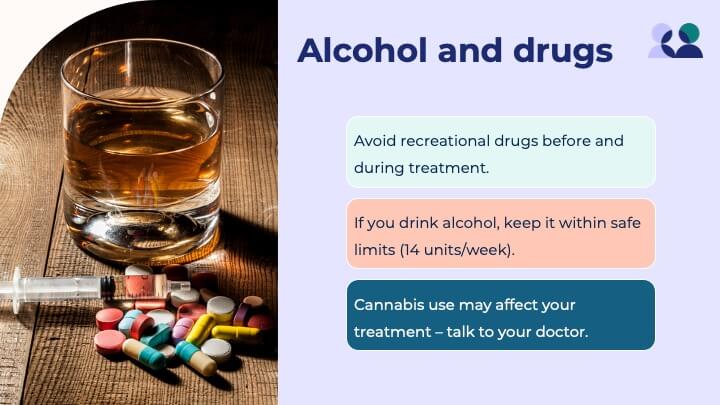
Alcohol and recreational drugs (such as cocaine, MDMA and cannabis) can make ADHD medication less safe and less effective.
These can:
- Increase strain on the heart.
- Raise blood pressure.
- Increase the risk of serious health problems.
- Worsen anxiety, agitation, or mood problems.
- Reduce the benefits of ADHD medication.
It’s important to be honest with your team so they can keep you safe.
Mental health and starting treatment
If you are feeling very low, unsafe or mentally unwell, you may need some extra support before starting ADHD medication.
This is not about denying treatment. It’s about making sure you are safe, supported and stable enough to begin titration well.
Holidays, travel and pauses in titration
If you have a holiday booked, please don’t worry. This does not automatically stop treatment.
If you are due to travel, tell the treatment team. Titration can often be paused for a short period if needed. Because ADHD medications are often controlled drugs, you may also need to check travel rules for the country you are visiting.
Pregnancy and breastfeeding
What happens if you are pregnant, planning a pregnancy or breastfeeding?
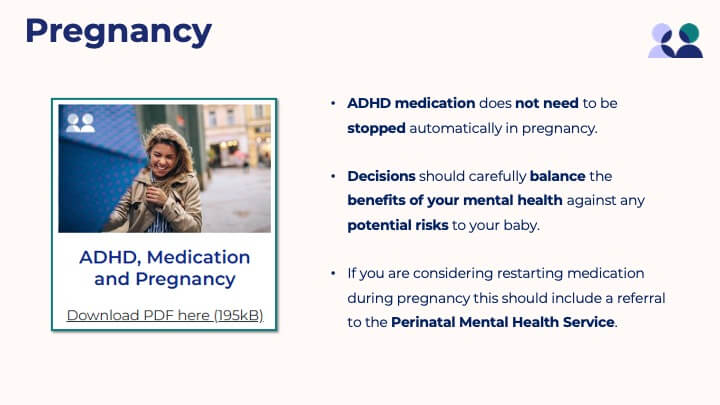
The key message is: do not panic. ADHD medication does not always have to be stopped automatically. Treatment decisions should be made with your clinician based on your individual needs and preferences.
Download our ADHD and Pregnancy guide for more information.
 It’s okay not to be ready
If treatment feels too overwhelming right now, you can step back and return later. This is especially relevant if you need more physical health checks first, such as cardiology or neurology investigations.
The two main types of ADHD medication
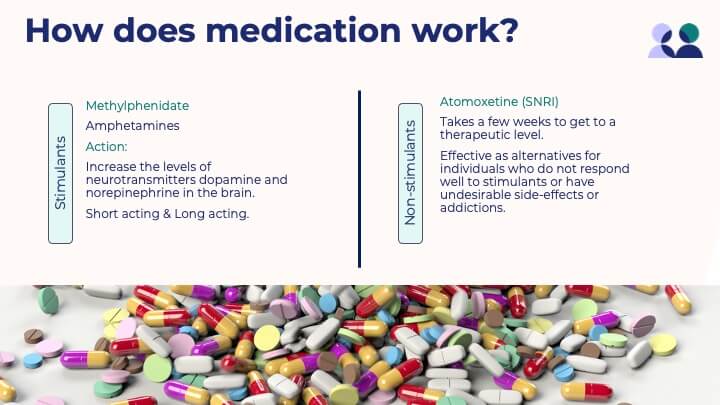
There are two main groups of ADHD medication:
- Stimulants.
- Non-stimulants.
Stimulants are usually tried first and often work more quickly. Non-stimulants may be used if stimulants do not help enough or cause difficult side effects.
Both types aim to improve attention, focus, and impulse control.
Why titration matters
Different people respond differently to medication.
Titration is the process of adjusting medication carefully to find:
- The right type.
- The right dose.
- The best balance between benefits and side effects.
It is a process of trial, review and adjustment with your prescriber.
How ADHD medication works in the brain
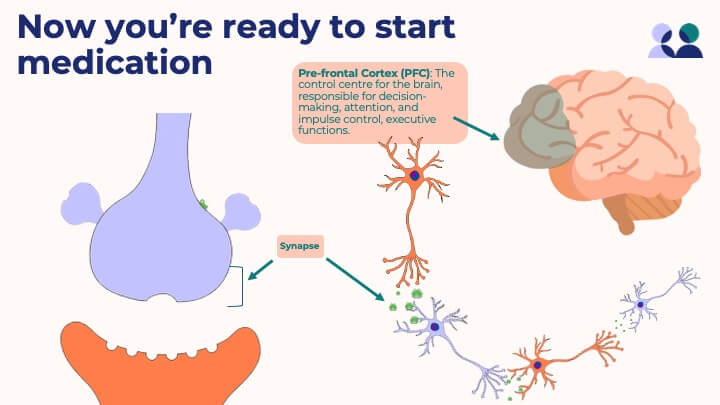
This slide introduces a simple explanation of brain signalling.
It explains that the brain uses chemical messengers such as dopamine and noradrenaline to pass messages between brain cells. In ADHD, these signals do not always work smoothly. Medication helps the messages travel more effectively.
A neurotypical brain vs an ADHD brain
How tasks may happen in different brains.
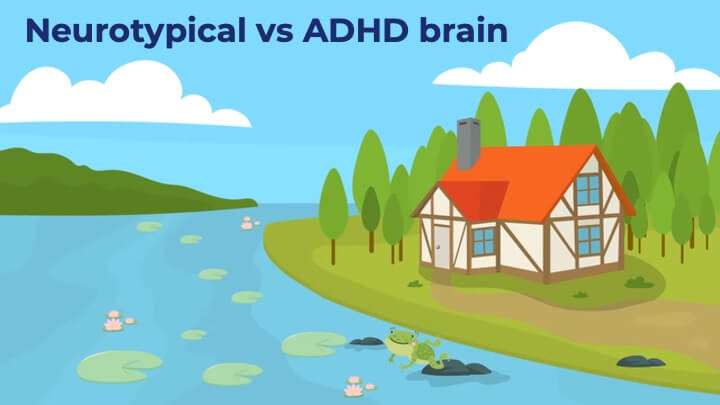
In a neurotypical brain, a thought can move more smoothly from intention to action. In ADHD, the process is more easily interrupted by distractions, competing thoughts or forgetfulness.
For example: When making a cup of tea, distractions can interrupt the task before it is completed.
The ‘frogs and lily pads’ explanation
This is an easy visual metaphor to explain brain signalling and why focus, follow-through and task completion can be difficult in ADHD.
The ‘frogs’ represent chemical messengers moving across ‘lily pads’ in the brain. In ADHD, the signal gets interrupted or pulled back too quickly, so the message does not carry through properly. Medication helps the signals stay in place long enough to work better.
How stimulant medication helps
Stimulant medications, such as methylphenidate and lisdexamfetamine, help brain signals work more effectively.
In simple terms, they help the chemical messengers stay active for longer, so the brain can follow through on actions more easily. This can improve focus, reduce distractibility, and help with organisation and impulse control.
Think about what improvement would mean for you personally.
Medication does not always create a dramatic transformation. Sometimes the benefits are smaller but still very meaningful, such as:
- Getting chores done.
- Feeling calmer.
- Managing work better.
- Having fewer arguments at home.
- Feeling less overwhelmed.
The important question is: what would a good result look like for you?
Real-life examples of benefit
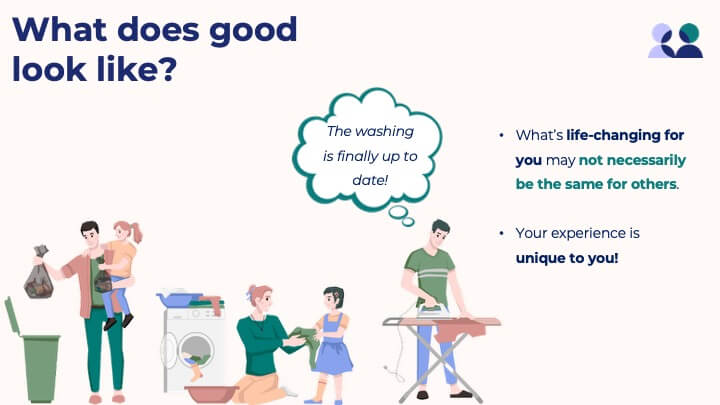
Medication can be ‘life-changing’ in different ways.
For one person, it might mean being able to manage household tasks more easily, which reduces stress at home. For another, it means handling work emails better, which improves job performance and reduces the risk of losing their job.
The message is that meaningful change is personal and does not have to look dramatic.
Choosing your own treatment goals
Identify three areas you would most like to improve.
Examples might include:
- Starting and finishing tasks.
- Staying focused.
- Feeling calmer.
- Managing emotions.
- Spending less impulsively.
- Reducing binge eating or comfort eating.
- Feeling more organised.
This can help you and your prescriber judge whether medication is helping.
How well medication works
- Around 50 to 70% of adults respond to stimulants.
- Around 40 to 56% respond to non-stimulants.
- Around 15 to 20% do not respond well to either.
If medication does not help, this is not your fault. It simply means medication may not be the right tool for your brain.
Medication is not the only support
Medication is only one part of ADHD treatment.
Other helpful supports may include:
- ADHD coaching.
- Psychological therapies.
- Practical coping strategies.
- Routines and structure.
- Support groups and peer support.
Although medication can help, it does not replace learning how ADHD affects you and what helps you function well.
What to expect during titration
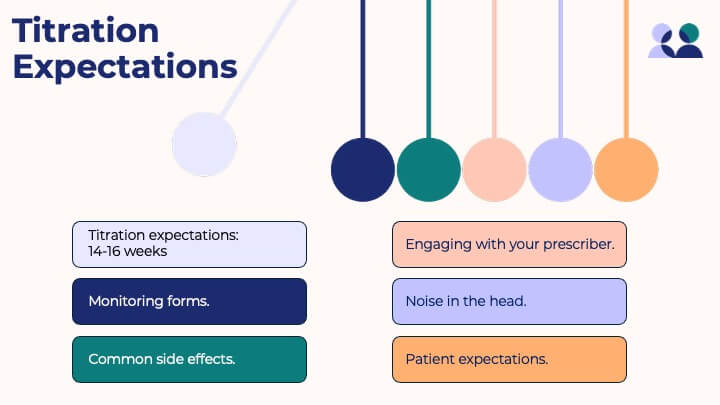
Titration usually lasts around 14 to 16 weeks, although some people settle on the right treatment more quickly.
The process is individual. Some people feel benefits early, while others need more time or several medication changes.
The first few weeks of treatment
The first four weeks are especially important.
Medication is increased gradually so your team can assess:
- Whether it helps your symptoms.
- Whether side effects happen.
- Whether the side effects are manageable.
- Whether the dose is right for you.
Monitoring forms and symptom tracking
We will ask you to complete regular monitoring forms during titration.
These forms help your clinician understand how medication is affecting:
- Attention.
- Hyperactivity.
- Impulsivity.
- Mood.
- Daily functioning.
- Side effects.
The aim is to track change over time, even if the improvement is subtle.
Common side effects
Common side effects, especially with stimulant medication, can include:
- Reduced appetite.
- Difficulty sleeping.
- Dry mouth.
- Headache.
- Nausea.
- Dizziness.
- Irritability.
- Anxiety.
The reassuring message is that many side effects improve in the first couple of weeks as your body adjusts.
Serious side effects – when to get help
Some side effects are rare but serious.
You should stop the medication and seek urgent advice if you experience:
- Chest pain.
- Fainting.
- Seizures.
- Severe mood changes.
- Sudden tics or involuntary movements.
- Allergic reactions.
What the right balance looks like
The goal is not to experience zero side effects at all costs.
The aim is to find a treatment where:
- The benefits are noticeable and meaningful.
- Side effects are manageable.
- Daily life improves overall.
This balance will look different for each person.
Top tips for taking medication
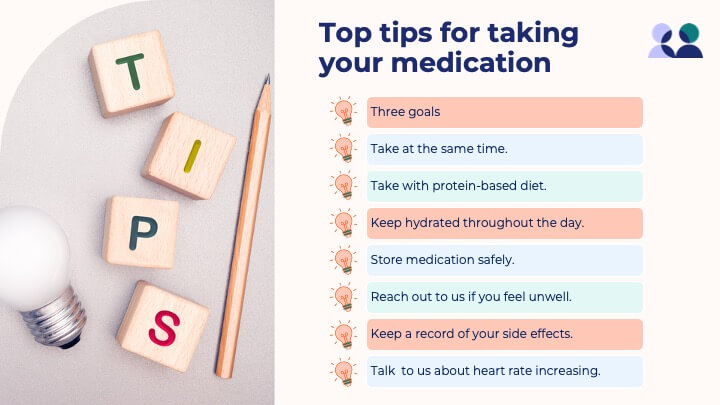
Here is some practical advice:
- Take medication at the same time each day.
- Set an alarm or reminder.
- Keep it in a safe, consistent place.
- Take it with food if advised.
- Stay hydrated.
- Write down side effects.
- Contact your team if you feel unwell.
These small habits can make treatment easier and more effective.
Food, protein, and hydration
Eating regularly and staying hydrated can reduce side effects.
A protein-based breakfast or meal may help with:
- Nausea.
- Dizziness.
- Feeling jittery.
Drinking enough water may help with:
- Dry mouth.
- Headaches.
- Dizziness.
- Blood pressure changes.
Heart rate, palpitations and body awareness
Some people notice their heart beating faster when medication starts to work, especially in the first 30 to 60 minutes.
Sometimes this settles and is not a problem. But if it continues, feels severe, or worries you, you should tell your prescriber.
Caffeine, exercise, anxiety, and not eating enough can also affect heart rate.
End of titration and Shared Care
What happens once your medication and dose are stable?
Your team will review your treatment and may ask your GP to prescribe under a Shared Care arrangement. If your GP declines, this should not automatically stop your treatment, as Psychiatry UK can continue prescribing.
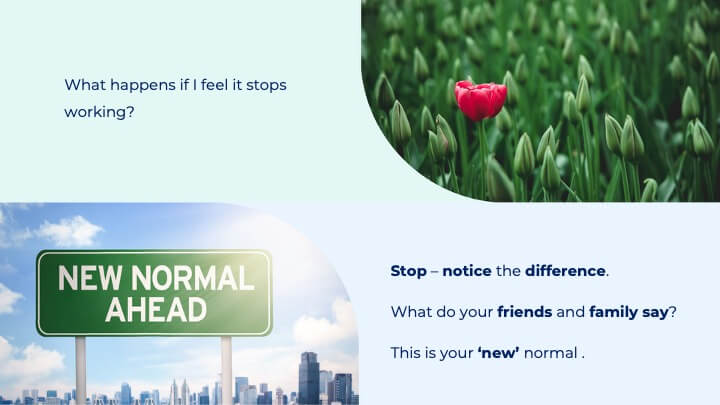
When medication becomes your ‘new normal’
Once medication is working and life settles, you may stop noticing its effects so clearly.
This does not necessarily mean it has stopped working. Sometimes family members, friends, or partners notice the difference more than you do. Missing a dose may also help you recognise the benefits.
Other sources of support
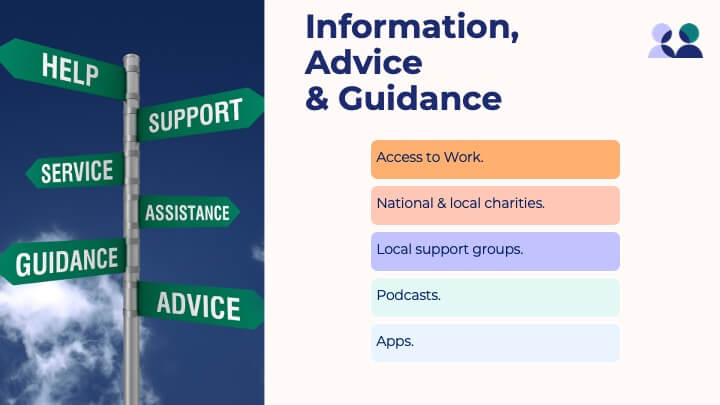
Other forms of help are available, including:
- Access to Work.
- Local support groups.
- Online communities.
- Podcasts.
- Apps for reminders, organisation and daily routines.
These supports can be useful alongside medication or on their own.
Be kind to yourself
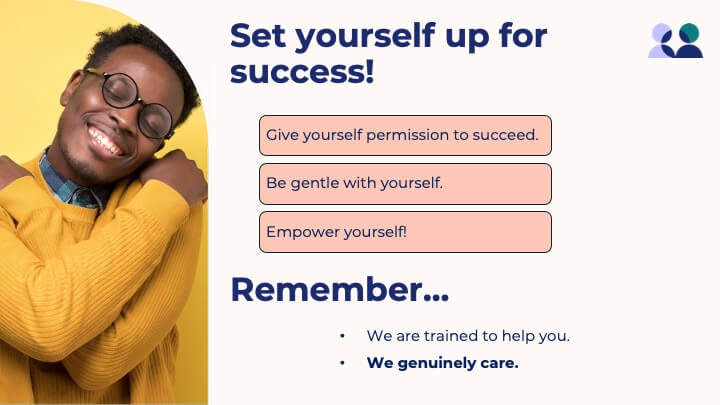
Don’t expect perfection.
Treatment is not all-or-nothing. Medication does not need to remove every ADHD difficulty to be worthwhile. Small improvements still matter. You are allowed to take your time, ask questions and decide what feels right for you.
There is no single right path and we will be here to support you.
The Lived Experience Perspective: Jessica and Laura’s Stories
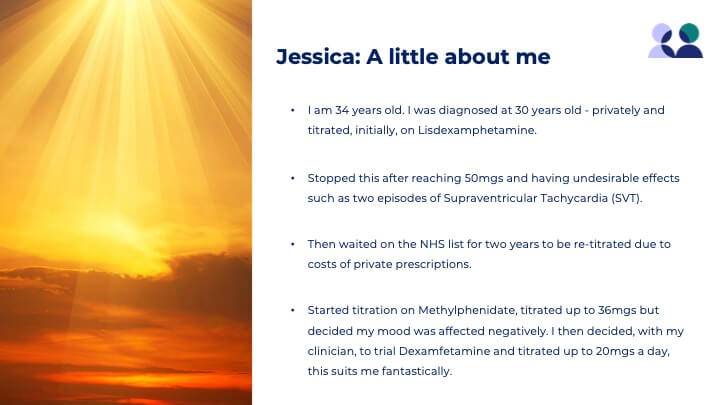
Jessica was diagnosed with ADHD at the age of 30. Before that, she had always felt that something was not quite working for her, although she couldn’t really explain why.
When her son was diagnosed with ADHD, and she learned more about his symptoms, she began to recognise many of the same traits in herself. This led to her own diagnosis.
Key message: Sometimes ADHD is recognised in adulthood after a child in the family is diagnosed, and learning more about ADHD can help people understand themselves.
Diagnosis brought relief, but medication felt scary
Getting diagnosed felt like an epiphany for Jessica. Things suddenly made sense. At the same time, she felt hesitant about starting medication.
Her worries were shaped by her brother’s experience of ADHD treatment many years earlier. He had a difficult experience with medication, and this made her fear the same thing would happen to her.
She later learned that there were more treatment options available and that medication could be introduced gradually through titration.
Key message: A diagnosis can feel validating, but fear about medication is common, especially if past experiences or family experiences were negative.
Jessica’s first experience of titration
Jessica first started on lisdexamfetamine. At the beginning, it helped her feel more focused and organised. She felt able to hold on to thoughts and tasks without needing to rely so heavily on reminders, lists and notes.
After a couple of weeks, though, she began to feel that it was wearing off too soon. She became more lethargic and emotional in the afternoons, so her dose was increased.
Key message: Medication can work well at first, but dose changes are sometimes needed if benefits wear off too soon or symptoms return later in the day.
A difficult reaction involving caffeine and exercise
After Jessica’s dose increased, she noticed that although the medication seemed to last longer, there was a problem. She was drinking coffee, taking pre-workout products and not eating much breakfast, and then experienced a very fast heart rate.
She became unwell and went to hospital. She was told to stop both the medication and caffeine.
Key message: Medication does not exist in isolation. Caffeine, exercise supplements and not eating enough can all affect how stimulant medication feels in the body.
Starting again through NHS titration
After this experience, she waited to restart titration through the NHS. This time, she began methylphenidate, starting on a low dose and increasing gradually.
She found that it helped her function and focus, but it did not feel as effective for her as lisdexamfetamine had. She also noticed that it affected her mood in a way she didn’t like.
Key message: A medication may help somewhat, but still not feel like the right fit. Mood effects matter too.
Finding the medication that suited her
Because lisdexamfetamine no longer felt like the safest option, Jessica and her clinician tried dexamphetamine, an instant-release stimulant.
She started on a very low dose because of her earlier experience, and she says that this medication now suits her very well.
Key message: Finding the right medication can take time, and sometimes a different formulation makes a big difference.
The symptoms medication helped most
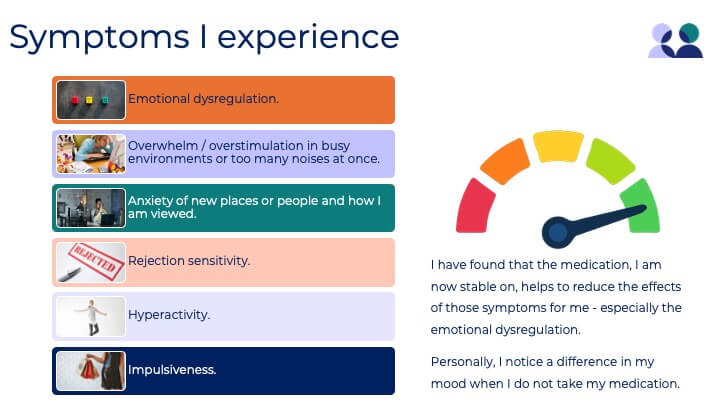
Jessica says that before medication, her biggest difficulty was emotional dysregulation. She explains that this is now much less intense when she takes medication.
She also notices improvements in:
- Overwhelm.
- Rejection sensitivity.
- Impulsiveness.
- Focus.
- Feeling more steady and balanced.
She still experiences some symptoms, but they are much less severe than before.
Key message: Medication may not remove all symptoms, but it can make them feel much more manageable.
Jessica’s day-to-day habits and practical changes
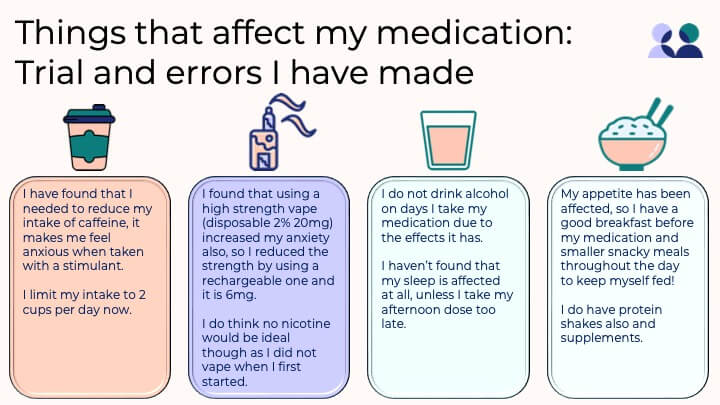
Jessica shared some of the changes she has made to help medication work better for her.
She has:
- Reduced caffeine and limits herself to two coffees a day.
- Reduced vaping because it increased her anxiety.
- Chosen not to drink alcohol on the days she takes medication.
- Adjusted how she eats by having smaller meals through the day.
- Continued to use phone timers and planning apps to stay organised.
She recommends using practical tools such as the Time Tree app rather than relying on loose notes.
Key message: Medication helps, but routines, apps and lifestyle adjustments are still important.
Laura’s story
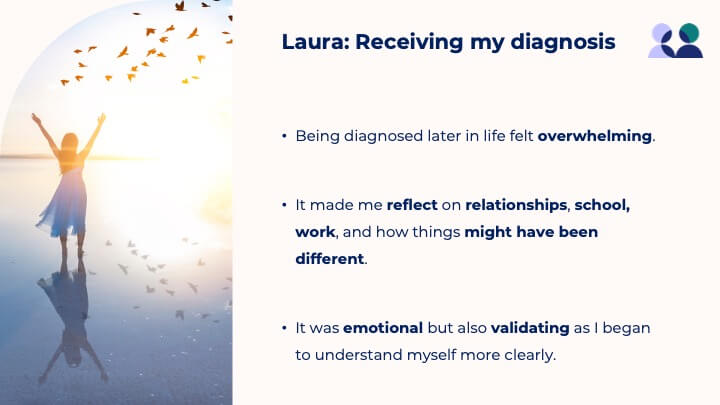
Laura was diagnosed in April 2024 at the age of 42. Receiving a diagnosis later in life was deeply emotional.
She describes it as both life-affirming and sad. It helped her understand herself better, but it also led her to reflect on missed support, past relationships, education and work experiences.
Key message: A late diagnosis can bring both clarity and grief.
Feeling underprepared at the start of treatment
Laura says that after diagnosis, she did not feel she received enough support or psychoeducation. She felt she was simply told she had ADHD and then expected to learn everything herself.
She started lisdexamfetamine soon after diagnosis, without much time to process the diagnosis or build realistic expectations about what medication might do.
She expected medication to change everything quickly, and later realised that this expectation had set her up for disappointment.
Key message: Support and realistic expectations are important when starting ADHD medication.
Early benefits of lisdexamfetamine
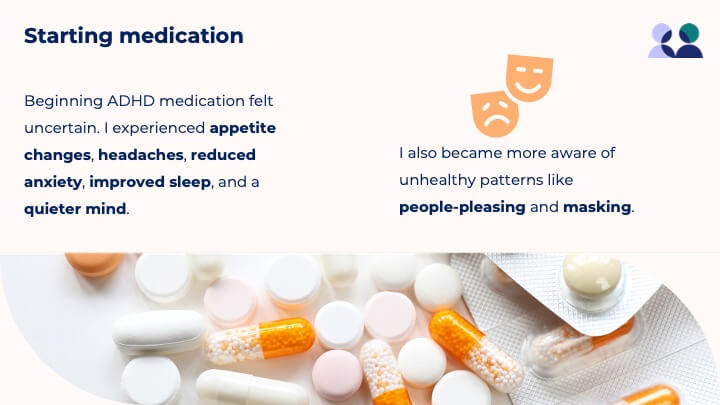
Laura describes some of the early changes she noticed on medication. She had headaches after dose increases, but these settled after a few days.
She also noticed:
- Less craving for junk food.
- Better control over eating.
- Feeling calmer.
- More motivation.
- Better productivity.
- Improved sleep.
- A quieter mind.
She describes feeling more able to get on with tasks she had been avoiding and more able to cope with day-to-day life.
Key message: Early medication benefits may include calmer thinking, better motivation, improved sleep, and reduced dopamine-seeking behaviours such as overeating.
Emotional changes and becoming more self-aware
Medication also made her more aware of herself and of other people’s behaviour.
She noticed that she was less likely to people-please, less likely to ignore poor treatment from others, and more aware of what felt safe and healthy in relationships. This was positive, but also emotionally difficult.
She says this felt a bit like a bereavement and that counselling helped her through this stage.
Key message: Medication can increase self-awareness, and sometimes that means noticing difficult relationship patterns more clearly.
Increasing the dose too far
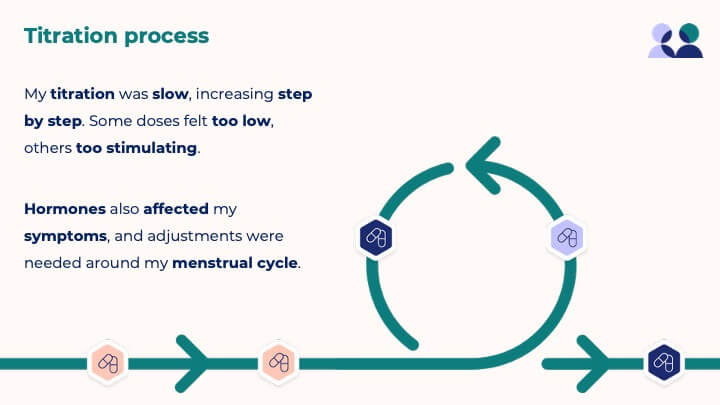
Her titration was gradual: 30 mg, then 50 mg, then 70 mg of lisdexamfetamine.
At 70 mg, she felt overstimulated and unlike herself. She describes this as being “too much medication”. She realised there is a fine line between being under-medicated and over-medicated.
Even though the dose was too high, she stayed on it for some time because the medication had helped in many other ways and she was reluctant to change something that had clearly been beneficial overall.
Key message: More medication is not always better. The right dose is about balance, not just stronger effects.
Adjusting treatment around symptoms and menstrual cycle
After reflection and discussion with her ADHD prescriber, she realised that her symptoms were worse at certain points in her menstrual cycle.
Her treatment was adjusted, including changes to the dose and the option of an extra amount when needed. Even so, she still felt that her symptoms were not fully managed, and eventually moved back to a lower overall dose.
Key message: Hormonal changes can affect ADHD symptoms and how medication feels, so treatment sometimes needs to be adjusted around this.
Changing from lisdexamfetamine to methylphenidate
Laura later decided to change medication because she was still experiencing impulsivity. She switched from lisdexamfetamine to Xaggitin XL (a form of methylphenidate).
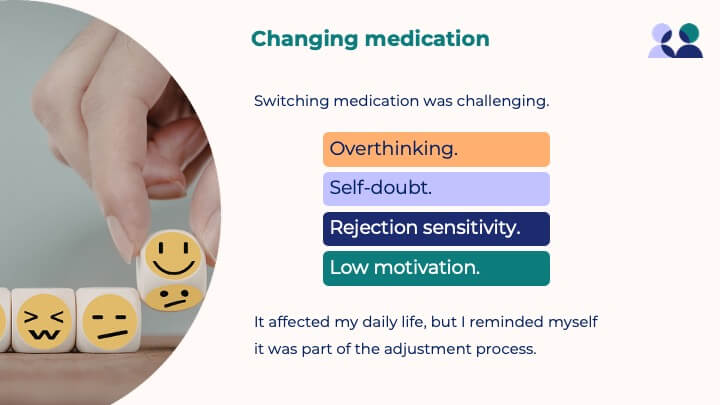
Because it was a new medication, she had to start from a low dose again. She found this transition very difficult. It felt like all her untreated ADHD symptoms came back at once.
She experienced:
- Overthinking.
- Self-doubt.
- Imposter syndrome.
- Rejection sensitivity.
- Low motivation.
- Increased sensitivity at work.
Key message: Changing medication can be hard, especially if you have already experienced the benefits of treatment.
Settling on a medication that feels better for her
She is now on a higher dose of Xaggitin XL and feels that it suits her better.
She says it helps her feel:
- Calmer.
- More grounded.
- Less impulsive.
- More thoughtful in her choices.
- More content overall.
Although it does not give her exactly the same motivation boost as she had on lisdexamfetamine, she feels it manages her impulsivity better and is a better fit for her overall.
Key message: The best medication is not necessarily the one that feels strongest, but the one that helps you function well and feels sustainable.
Looking back with compassion
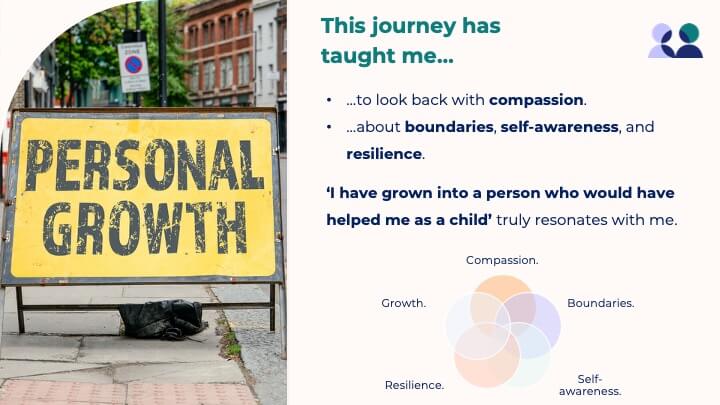
Laura looks back on how much she has changed. She says she used to be very self-critical, but now she feels more compassion for her younger self.
She is more able to set boundaries, reflect on her experiences and recognise her resilience. She shares an emotional quote: that “she has grown into the kind of person who would have helped her as a child”.
Key message: ADHD treatment can be about much more than symptom control. It can also support self-understanding, healing and self-compassion.
Final message from Laura
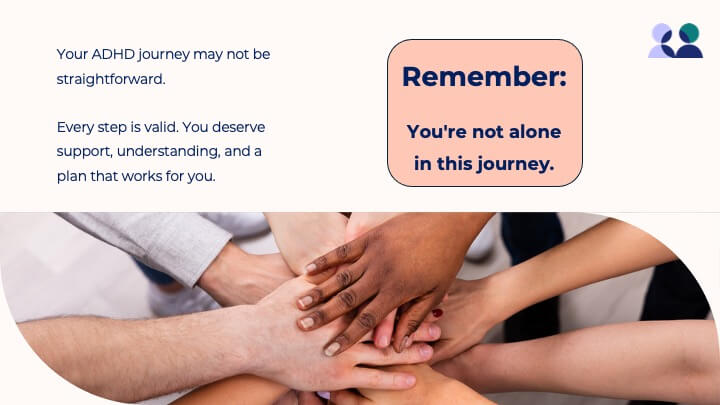
Laura finishes by saying that the journey has been worth it. Although it has been emotional and not always straightforward, it has helped her understand herself and support others better as well.
Key message: ADHD treatment can be a long and sometimes difficult journey, but for many people it is also a deeply worthwhile one.









Leave A Comment