

An overview of our patient webinar, ‘Women’s Health through a Neurodivergent Lens’, held on 15 September 2026.
For many women with ADHD, symptoms can change throughout their lives. There may be times when managing everyday tasks feels relatively straightforward, followed by periods when concentration, organisation, emotions and energy levels become much harder to manage.
Hormonal changes can play an important part in these experiences.
In our recent patient webinar, Dr Enone McKenzie, Consultant Psychiatrist, explored how hormonal changes can influence ADHD symptoms during the menstrual cycle, perimenopause and menopause.
We also heard from Eleanor and Wendy, who generously shared their personal experiences of living with ADHD and the impact hormonal changes have had on their lives.
This article brings together the key information, advice and personal insights shared during the session.
Key takeaways
- Hormones can affect ADHD symptoms. Changes in oestrogen and progesterone can influence concentration, motivation, emotions and energy levels, so your symptoms may change at different times in your life.
- Your menstrual cycle may play a part. Some women find their symptoms feel worse, or their ADHD medication feels less effective, in the seven to ten days before a period. PMDD is treatable, so speak to your GP if you regularly have significant emotional or physical difficulties before your period.
- Perimenopause can make ADHD harder to manage. Coping strategies that have worked for years may stop working, and some women seek an ADHD assessment for the first time during this stage.
- Tracking your symptoms can really help. A simple record of your cycle, symptoms and how well your medication is working can help you spot patterns and explain what is happening to your clinician.
- There is no one-size-fits-all approach. Support may include reviewing your ADHD medication, HRT and everyday strategies such as sleep, exercise and nutrition. Your GP or clinician can help you find what works for you.
Why do hormones matter in ADHD?
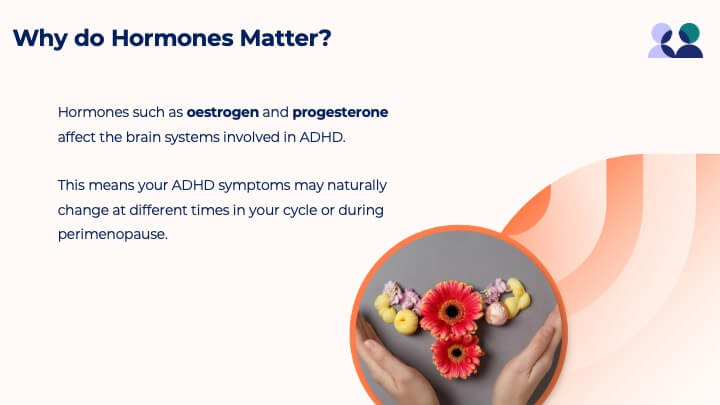
ADHD is associated with differences in the way certain chemical messengers in the brain, known as neurotransmitters, work. Two of these are dopamine and noradrenaline, which play important roles in concentration, motivation, attention and emotional regulation.
Hormones such as oestrogen and progesterone interact with these brain systems.
Oestrogen influences dopamine activity. When oestrogen levels fall, some women notice that concentrating, staying motivated and managing emotions become more difficult.
Progesterone influences brain systems involved in relaxation and emotional regulation. Changes in progesterone and its related hormones may also affect mood, anxiety and sleep.
Because these hormones naturally fluctuate throughout a woman’s life, ADHD symptoms may become more noticeable at certain times.
Understanding this connection can help explain why something that felt manageable last week might suddenly feel much more difficult.
ADHD and the menstrual cycle
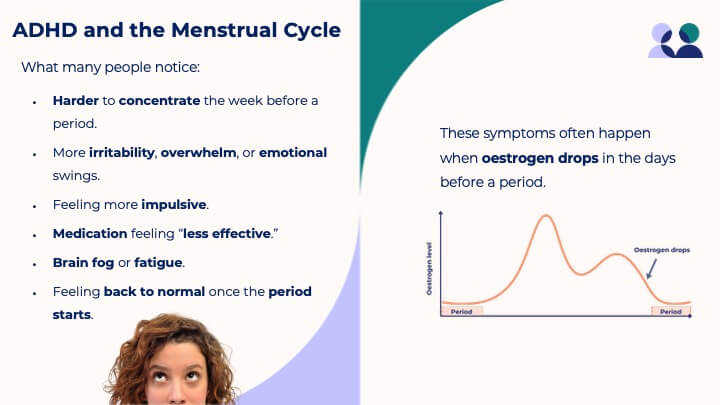
Some women notice a clear pattern in the way their ADHD symptoms change throughout their menstrual cycle.
During the first half of the cycle, known as the follicular phase, oestrogen levels generally rise. Some women find they have more energy, better concentration and greater emotional stability during this time.
Around ovulation, when oestrogen levels are relatively high, some people feel particularly productive or focused.
However, during the second half of the cycle, known as the luteal phase, hormone levels change again.
In the seven to ten days before a period, falling hormone levels may be associated with:
- Difficulty concentrating or completing everyday tasks.
- Increased irritability or emotional sensitivity.
- Feeling overwhelmed more easily.
- Greater impulsivity.
- Increased sensitivity to noise or other sensory experiences.
- Brain fog and fatigue.
- Feeling that ADHD medication is less effective.
For some women, these symptoms begin to improve once their period starts.
Not everyone experiences these changes, and their severity can vary considerably. However, recognising a recurring pattern can help you understand your symptoms and identify when additional support might be useful.
PMDD and ADHD
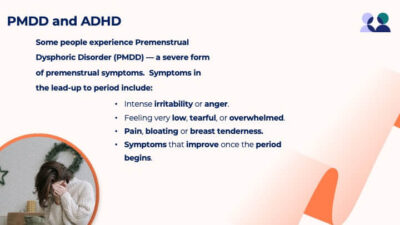
Some women with ADHD also experience premenstrual dysphoric disorder (PMDD).
PMDD is a severe, cyclical condition involving significant emotional and sometimes physical symptoms in the days or weeks before menstruation.
Research suggests that people with ADHD may be more likely to experience PMDD.
Symptoms can include:
- Intense irritability or anger.
- Feeling extremely low, tearful or overwhelmed.
- Significant emotional changes.
- Physical symptoms such as pain, bloating or breast tenderness.
- Feeling disconnected from other people.
- Symptoms that improve shortly after menstruation begins.
PMDD can have a profound impact on everyday life, relationships and mental wellbeing.
It is also associated with an increased risk of suicidal thoughts, so recognising symptoms and seeking appropriate support is particularly important.
PMDD is treatable. If you regularly experience significant emotional or physical difficulties before your period, speak to your GP.
Keeping a daily record of symptoms over at least two menstrual cycles can help clinicians recognise the pattern and consider whether PMDD may be contributing to your experiences.
If you are having thoughts of suicide or feel unable to keep yourself safe, seek urgent support through NHS 111, your local crisis service or 999 in an immediate emergency.
ADHD and perimenopause
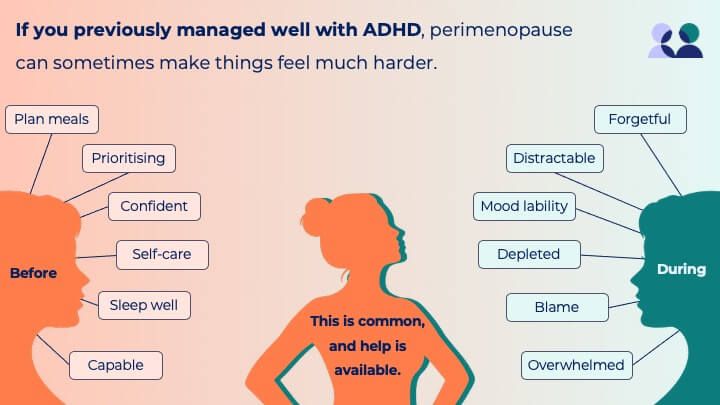
Perimenopause is the transitional stage leading up to menopause. It commonly begins during a woman’s 40s, although it can start earlier.
During this time, oestrogen and progesterone levels can fluctuate considerably, sometimes in an unpredictable way.
For women with ADHD, these changes may make existing symptoms harder to manage.
Common experiences include:
- Increased forgetfulness.
- Difficulty finding words or recalling information.
- Brain fog and problems concentrating.
- Feeling more anxious or overwhelmed.
- Increased irritability or changes in mood.
- Sleep difficulties.
- Hot flushes or night sweats.
- Irregular or changing periods.
- Muscle and joint pain.
However, not everyone experiences the more familiar symptoms of perimenopause, such as hot flushes or irregular periods.
For some women, the first noticeable changes may be related to memory, concentration, emotional wellbeing or their ability to manage everyday responsibilities.
When your usual coping strategies stop working
Many women with ADHD develop strategies throughout their lives to help them stay organised, manage responsibilities and meet everyday expectations.
These strategies may have worked well for years, sometimes without the person realising how much effort they required.
During perimenopause, hormonal changes can make these familiar approaches less effective.
Tasks such as planning meals, organising the home, remembering appointments or managing work responsibilities may begin to feel exhausting.
Some women describe a loss of confidence or a feeling that they are no longer themselves.
Perimenopause can also be a time when previously unrecognised ADHD becomes more apparent, leading some women to seek an assessment for the first time.
If you have noticed significant changes in the way you are managing everyday life, it may be helpful to discuss both ADHD and perimenopause with your GP.

Treatment options: what can help?
There is no single treatment approach that works for everyone.
Dr McKenzie emphasised the importance of understanding your individual experiences and working with your clinician to identify appropriate support.
ADHD medication
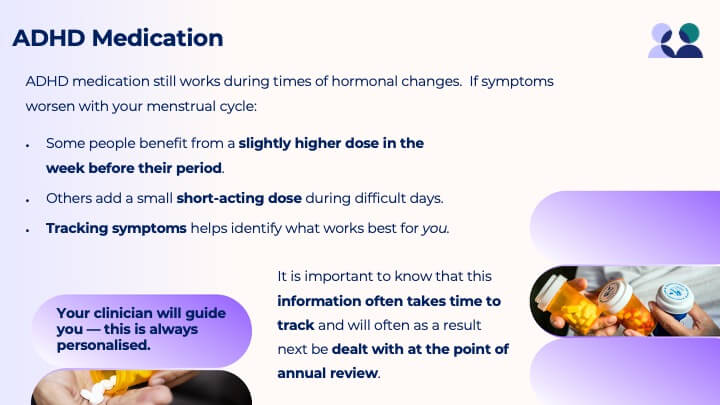
ADHD medication can remain effective during hormonal changes. However, some women notice that it feels less effective at certain points in their menstrual cycle.
Depending on individual circumstances, a prescribing clinician may consider whether adjustments to medication are appropriate.
These might include changes to the prescribed dose or, in some cases, an additional short-acting medication during particular parts of the cycle.
However, evidence for cycle-based dose adjustments is still developing, and this is not a standard approach for everyone.
Never change your ADHD medication dose or schedule without discussing it with your prescriber.
Tracking your symptoms and medication response can help your clinician understand whether there is a recurring pattern and what options may be suitable.
Hormone replacement therapy (HRT)
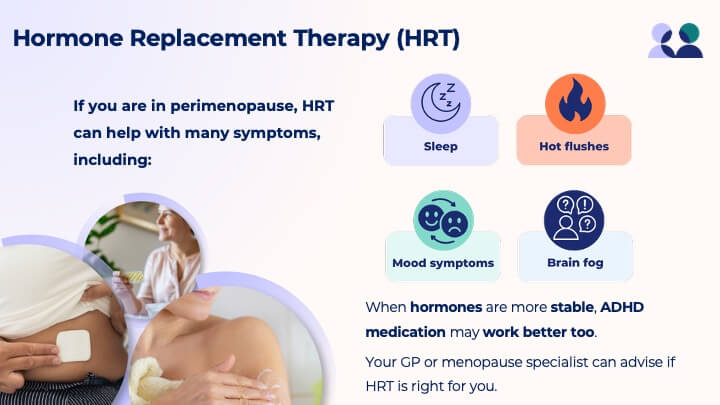
Hormone replacement therapy, also known as menopausal hormone therapy, can help manage symptoms associated with perimenopause and menopause.
By addressing hormone-related symptoms, HRT may improve sleep, mood, brain fog and overall wellbeing.
Some women also find that their ADHD symptoms become easier to manage when their menopausal symptoms are better controlled.
However, HRT is not a treatment for ADHD itself, and not everyone will experience the same benefits.
Some women may benefit from both HRT and ADHD medication, while others may find that one approach is more appropriate for their individual circumstances.
Your GP or menopause specialist can discuss the potential benefits, risks and alternatives with you.
Hormonal contraception and mood
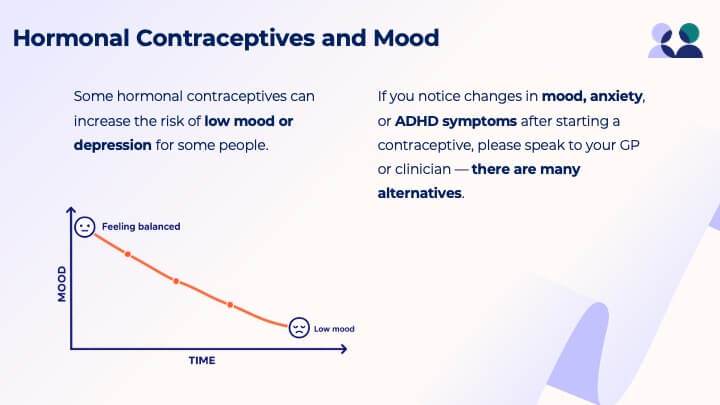
Some women are particularly sensitive to the hormonal changes associated with contraception.
If you notice changes in your mood, anxiety levels or ADHD symptoms after starting or changing hormonal contraception, speak to your GP or prescribing clinician.
Different contraceptive preparations contain different hormones, and your clinician can help you explore suitable alternatives.
Experiencing difficulties with hormonal contraception does not necessarily mean that you will have the same response to HRT.
Understanding your own patterns
One of the most useful themes from the webinar was the importance of recognising your individual patterns.
Dr McKenzie encouraged patients to keep a record of their symptoms, particularly if they notice changes in concentration, mood, sleep or medication effectiveness.
You could track:
- Your menstrual cycle, where applicable.
- Changes in concentration, motivation or memory.
- Emotional wellbeing and mood.
- Sleep quality and energy levels.
- Physical symptoms.
- How effective your medication feels.
You do not need a complicated system. A calendar, notebook or simple note on your phone may be enough.
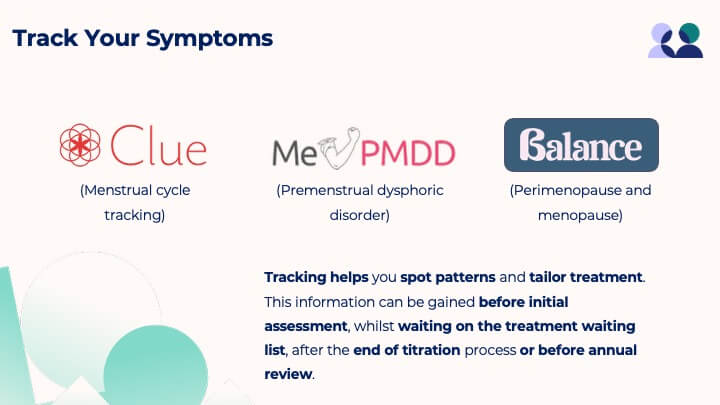
There are also apps designed to help, including:
- Clue – for menstrual cycle tracking.
- Me v PMDD – for monitoring symptoms associated with PMDD.
- Balance – for tracking perimenopausal and menopausal symptoms.
This information can be especially useful if you are waiting for an ADHD assessment, preparing to begin medication, undergoing titration or approaching a medication review.
Tracking is intended to help you, rather than becoming another responsibility. Choose an approach that feels manageable.
Everyday strategies that may help
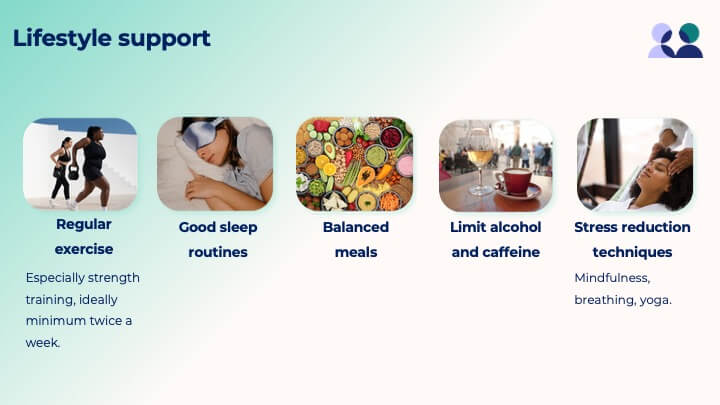
Alongside medical treatment, Dr McKenzie discussed several ways to support general health, emotional wellbeing and ADHD management.
Regular exercise
Physical activity can support mood, concentration and general wellbeing.
Strength training can be particularly beneficial during midlife, helping to maintain muscle strength and bone health.
Try to choose activities you enjoy and can realistically maintain.
Prioritising sleep
Sleep is particularly important when managing ADHD and hormonal changes.
Some women find they need additional rest during the later part of their menstrual cycle.
Where possible, maintain a consistent sleep routine and allow yourself time to recover when your energy levels are lower.
Balanced nutrition
Regular, balanced meals can help support energy levels and general health.
Dr McKenzie highlighted the importance of adequate protein, particularly during perimenopause and menopause.
Rather than focusing on restrictive diets, aim for a varied diet that provides the nutrients your body needs.
Limiting alcohol and caffeine
Alcohol and caffeine can affect sleep, mood and anxiety.
Some women find they become more sensitive to these effects during perimenopause or at certain stages of their menstrual cycle.
Being aware of how your body responds may help you make choices that support your wellbeing.
Managing stress
Stress can make ADHD symptoms more difficult to manage.
Relaxation techniques, mindfulness, breathing exercises and yoga may help some people.
Others may benefit more from reducing demands, planning recovery time or simplifying everyday routines.
The most useful approach is one that works for you and can become part of your regular routine.
Supplements
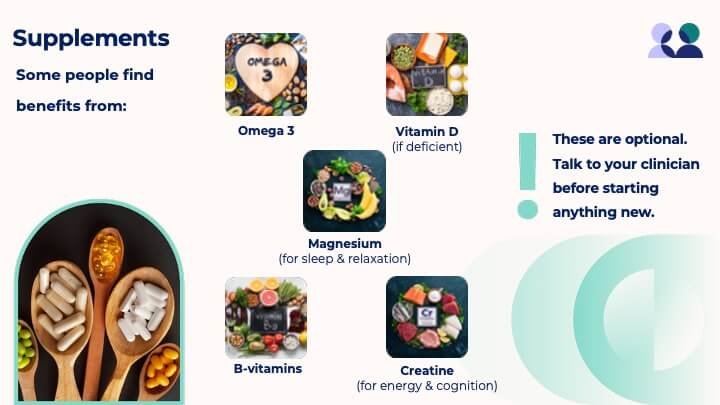
Dr McKenzie also discussed supplements such as omega-3, magnesium, creatine, vitamin D and B vitamins.
Some supplements may be helpful in particular circumstances, especially where a nutritional deficiency has been identified.
However, evidence for their effectiveness in ADHD or hormone-related symptoms varies, and they are not a replacement for prescribed treatment.
Always speak to your GP or clinician before starting a supplement.
Living with ADHD and hormonal changes: Eleanor’s story
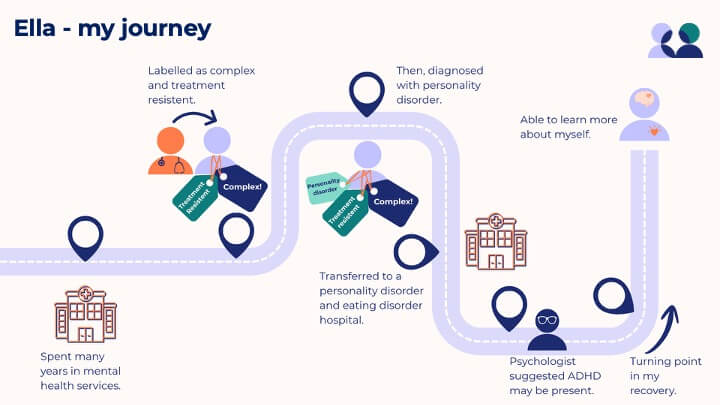
Eleanor shared her experience of receiving an ADHD diagnosis in adulthood, after many years of struggling with her mental health.
Before her diagnosis, she had experienced several mental health difficulties and received different diagnoses. It was during a period of inpatient treatment that a psychologist first suggested exploring whether she might be neurodivergent.
Initially, Eleanor did not recognise herself in the familiar stereotypes of ADHD.
However, learning more about how ADHD can affect emotional regulation and present differently in women helped her begin to understand her experiences.
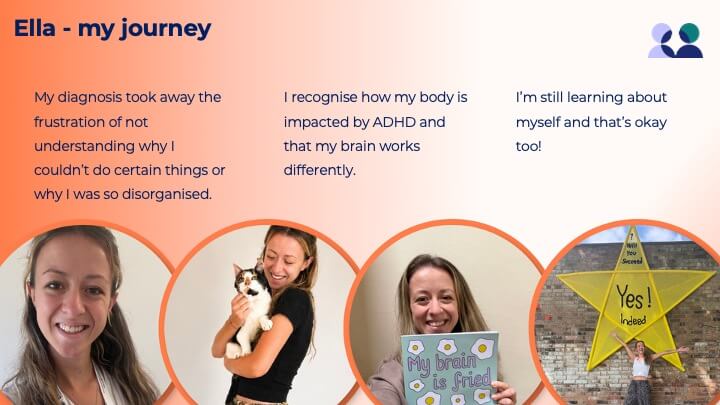
She described her diagnosis as an important turning point, allowing her to approach her difficulties with greater understanding and less frustration.
Recognising the impact of her menstrual cycle
Eleanor explained that she had only recently begun to recognise how her menstrual cycle affected her ADHD.
After starting medication, she noticed that her mind felt quieter and everyday tasks became easier to manage.
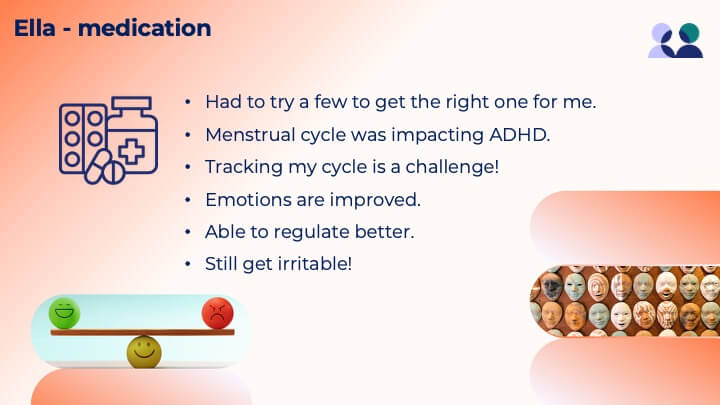
However, in the days before her period, she sometimes felt as though she had returned to how she felt before starting medication.
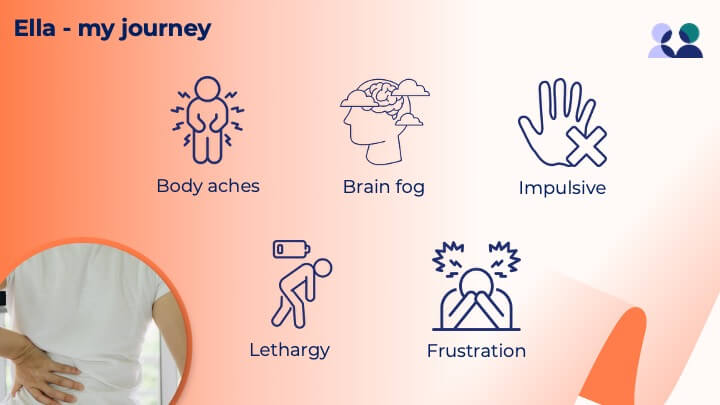
She described changes in concentration, emotional sensitivity, tiredness and physical discomfort.
Her periods are also irregular, making it difficult to predict when these changes might happen.
Eleanor spoke openly about the challenges of tracking symptoms when you have ADHD, particularly when remembering to record information can itself be difficult.
Her experiences highlighted an important point: understanding your patterns can be helpful, but it is not always straightforward.
She also described learning to balance the benefits of medication with recognising when she needed to rest, rather than feeling she should use every productive moment to complete more tasks.
For Eleanor, understanding ADHD has helped her become less critical of herself and more accepting of how her mind works.
When perimenopause changes everything: Wendy’s story
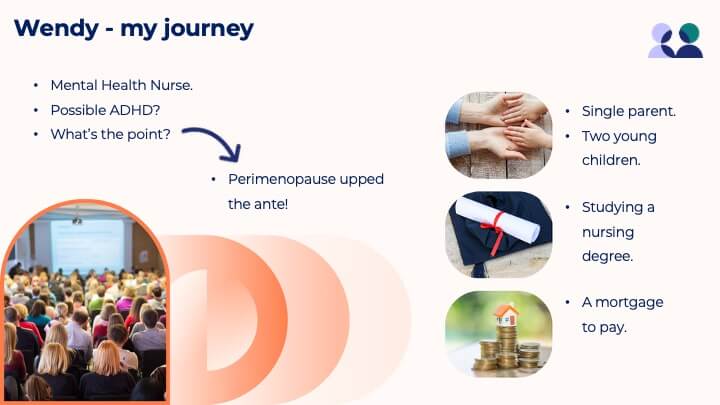
Wendy, a mental health nurse, shared a different experience.
Having managed a busy life as a single parent while studying for a nursing degree and progressing into her career, Wendy had developed strategies that helped her manage everyday responsibilities.
However, as she entered perimenopause, those strategies began to become less effective.
She initially did not recognise what was happening because she was not experiencing the symptoms she associated with menopause, such as hot flushes or changes in her previously regular periods.
Instead, she began experiencing increasing difficulties with concentration, memory, sensory sensitivity and emotional wellbeing.
The impact on everyday life
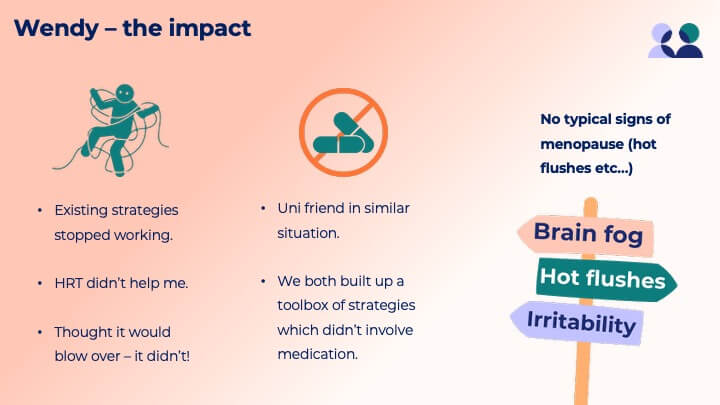
Wendy described becoming particularly sensitive to bright lights and everyday sounds.
A visit to the supermarket could feel overwhelming, with lighting, noise and movement becoming difficult to tolerate.
She also experienced significant word-finding difficulties.
At times, she could picture an everyday object clearly but could not remember the word for it.
These experiences became increasingly worrying, and Wendy began to question whether something more serious was affecting her memory.
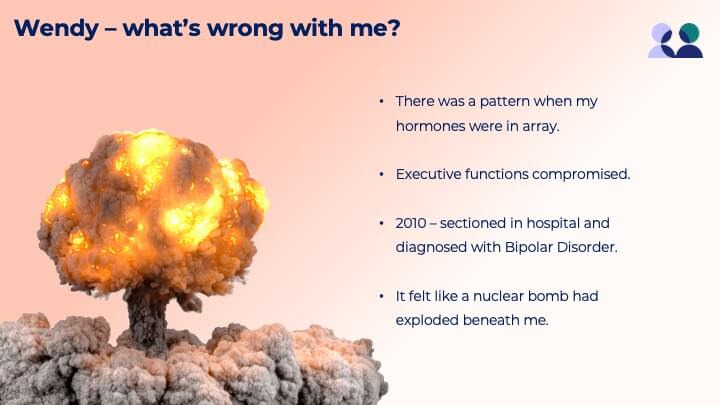
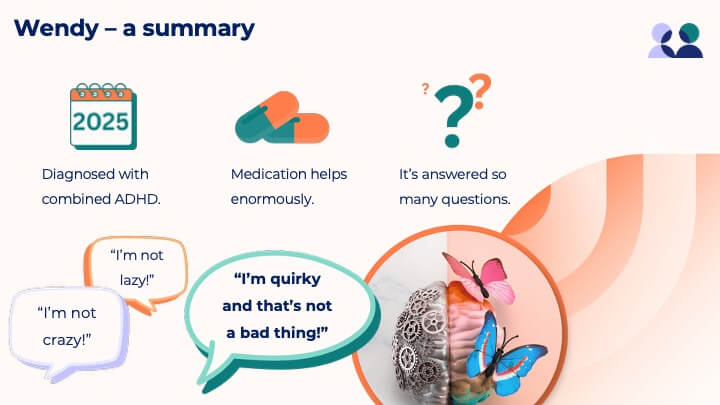
Eventually, she sought an ADHD assessment and received her diagnosis in 2025.
For Wendy, receiving a diagnosis provided an explanation for experiences that had previously been confusing and frightening.
It also helped her understand why strategies she had relied on for years were no longer working in the same way.
Finding what works

Wendy explained that HRT had not been the right approach for her, although a friend with similar experiences had benefited from it.
For Wendy, ADHD medication made a significant difference.
She also developed practical strategies to help manage attention and concentration, including preparing a list of tasks before starting her day and reducing distractions from her smartphone.
Her story illustrated how individual treatment and support needs can be, even among women experiencing similar hormonal changes.
Wendy also encouraged others not to view menopause as the end of a particular stage of life, but as a transition that can be better understood and managed with appropriate support.
When should you seek help?
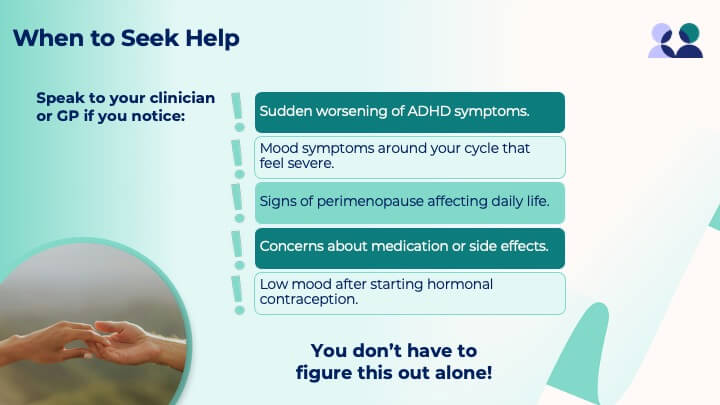
Speak to your GP or ADHD clinician if:
- Your ADHD symptoms become noticeably worse.
- You experience significant changes in mood before your period.
- Perimenopausal symptoms are affecting your daily life.
- Your usual strategies are no longer helping.
- You are concerned about medication effectiveness or side effects.
- You notice changes in mood or anxiety after starting hormonal contraception.
Keeping a record of your symptoms can make these conversations easier and help your clinician understand what you are experiencing.
Understanding your needs is an important first step
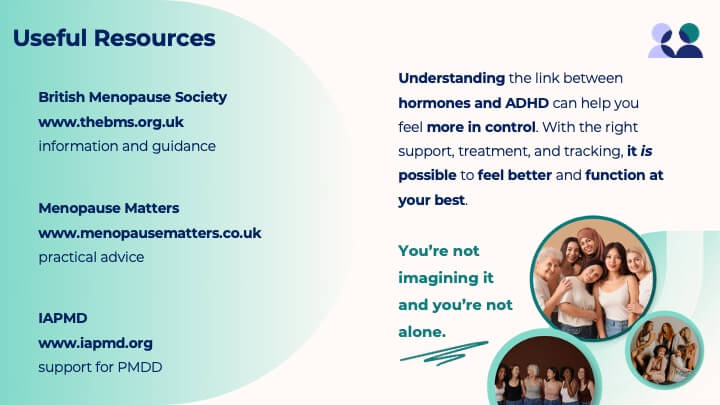
One of the strongest messages from the webinar was that ADHD does not necessarily remain the same throughout a woman’s life.
Hormonal changes can affect concentration, memory, energy levels and emotional wellbeing, sometimes making previously manageable symptoms feel much harder to cope with.
However, recognising these connections can help you understand your experiences, identify patterns and explore appropriate support.
As Eleanor’s and Wendy’s experiences demonstrate, there is no single journey and no one solution that works for everyone.
With greater understanding, appropriate treatment and practical strategies, it is possible to find ways of managing these changes that work for you.
Further information and support
- British Menopause Society – Information and guidance about menopause and treatment options.
- Menopause Matters – Practical information about menopause, symptoms and treatments.
- International Association for Premenstrual Disorders (IAPMD) – Information and support for PMDD and related conditions.
You can also explore more patient resources and webinar recordings on the Psychiatry UK YouTube channel.
Questions and practical tips from the webinar
The webinar ended with questions from attendees, giving the speakers an opportunity to explore some additional practical concerns.
Is there any advice if you don’t have periods?
Dr McKenzie explained that it depends on your own experience. The contraceptive pill and HRT can prevent hormonal fluctuations, which are often what make symptoms worse.
If your ADHD symptoms are still difficult to manage, they may need to be looked at separately from your hormones.
It is still important that your hormone levels are right for you, so that you are sleeping well and managing any pain, hot flushes or anxiety.
What can help with aching legs around your period?
Eleanor mentioned that her legs ache around the time of her period, and one attendee described a similar feeling in her calves and shins.
Eleanor finds it helps to lie on the sofa with her legs up in the air.
Dr McKenzie added that low iron can also contribute to aches and pains, especially in the legs.
Can ADHD medication help with brain fog?
Wendy shared that her ADHD medication really helps her to focus when perimenopausal brain fog sets in. It takes about an hour and a half to start working after her morning dose.
She writes her to-do list before it starts working, then ticks off each task. She also found that being on her smartphone when it started working could take up the rest of her day, so she eventually swapped it for a basic flip phone.
Medication affects people differently, so please speak to your prescriber about what may be suitable for you.
Can low iron contribute to brain fog and fatigue?
Low iron levels can contribute to tiredness, concentration difficulties and other symptoms that may overlap with ADHD.
Dr McKenzie explained that women with ADHD are much more likely to have low iron levels. She highlighted the importance of considering iron levels, particularly if you have heavy periods or are perimenopausal. Even if you are not anaemic, low iron can affect ADHD symptoms.
If you have ongoing tiredness, brain fog or other unexplained symptoms, speak to your GP about whether further investigation may be appropriate.
Do ADHD symptoms improve after menopause?
On the whole, people find that things become a little more manageable, because hormone levels fluctuate less.
However, oestrogen levels will be low after menopause if you are not taking HRT. Dr McKenzie explained that this means ADHD symptoms may be more stable, but they are likely to be a bit worse than before perimenopause.
Experiences vary, and ongoing treatment or support may still be helpful.
More of your questions answered
There wasn’t time to answer every question during the webinar, so here are our answers to the others you asked in the chat.
Could perimenopause symptoms be mistaken for ADHD?
Perimenopause can cause symptoms similar to ADHD, such as brain fog, poor concentration and forgetfulness, so clinicians need to be careful.
When we assess for ADHD, we look very specifically at your lifelong experience of ADHD symptoms, not only how you are feeling recently. Where menopausal symptoms are present, considering HRT can be an important first step.
Is HRT dangerous to take long term if I start it in my 40s?
For most women under 60, the benefits of HRT usually outweigh the risks. If your periods stopped before the age of 45, it is particularly important to consider HRT, to help protect your bones and heart.
There is no fixed time limit for taking HRT, but it should be reviewed regularly with your GP or menopause specialist.
If oestrogen and progesterone help with dopamine, why can hormonal contraception make things worse?
The hormones in contraception are different from the ones your body makes. Some people are sensitive to the synthetic progestogens in contraceptives, and this sensitivity seems to be more common in people with ADHD. It can affect mood, anxiety and ADHD symptoms.
Being sensitive to contraception doesn’t mean you will react the same way to HRT, because the hormones are different.
I can’t take the combined pill because of migraines. How else can I get the oestrogen I need?
There are different ways of taking hormones, and some may be suitable even if the combined pill isn’t. The right option depends on your migraines, your other health conditions and what you need the hormones for.
A GP with an interest in women’s health, a menopause clinic or a gynaecologist can talk through the options with you. Keeping a diary of your mood, ADHD symptoms, migraines and cycle can help them understand what is happening.
Are some progestogens, such as drospirenone, better for people with ADHD or PMDD?
Different progestogens can affect people differently, and some people who are sensitive to hormones find that one type suits them better than another.
There isn’t one choice that is right for everyone. A GP or specialist can weigh up your symptoms, health history and whether you need contraception, endometrial protection or both.
Can ADHD medication make depression worse?
For many people, treating ADHD improves their mood. However, ADHD medication can sometimes affect mood or cause anxiety, and everyone responds differently.
Atomoxetine, a non-stimulant, can affect mood a little more than other ADHD medications, especially if you already have depression, so this needs to be monitored.
If you notice low mood or other changes in your mental health, tell your prescriber. Please don’t stop atomoxetine suddenly without advice.
Does therapy help, or is it only medication that makes a difference?
Medication is the most evidence-based treatment for the core symptoms of ADHD, but therapy and coaching can also make a real difference, especially with coping strategies, confidence and anxiety. Many people find a combination works best.
Can childbirth make ADHD symptoms more noticeable?
Many women notice their ADHD symptoms more after having a baby. Your body goes through big hormonal changes after giving birth, and you are also likely to have less sleep and many new demands, all of which can make ADHD harder to manage.
The baby blues usually pass within two weeks of the birth. If low mood continues, gets worse or you’re struggling to cope, speak to your GP, midwife or health visitor.
I’m on ADHD medication and have started perimenopause. Can I start HRT too?
Yes, many women take HRT alongside ADHD medication. Some find that once their hormones are more stable, their ADHD symptoms are easier to manage, while others need both treatments.
Make sure both your GP and your ADHD prescriber know about all the medicines you take, so they can check that they are suitable together. Tracking your symptoms after starting HRT can also show whether your ADHD medication needs reviewing.
What medication helps with emotional regulation?
For many people, ADHD medication helps with emotional regulation as well as focus. For example, Jessica, who shared her experience in our ‘ADHD Medication in Adults’ webinar, found that her emotional dysregulation became much less intense with medication.
Eleanor didn’t share which medication she takes, and everyone responds differently. Your prescriber can talk through the options with you, and if your mood changes are linked to your cycle or perimenopause, hormonal treatment may help too.
I have endometriosis and adenomyosis and a Mirena coil. I rarely bleed, but still get all the symptoms. What can help?
Not having a period doesn’t always mean your hormones have stopped changing, so you may still notice a monthly pattern in your symptoms.
Tracking your mood, energy, pain and ADHD symptoms, rather than bleeding, can help you and your clinicians spot patterns. Some people are also sensitive to the hormones in the Mirena coil. Talk to your gynaecology team and your ADHD prescriber about what you notice.
Could dienogest affect how well my ADHD medication works?
It’s possible. Some people are sensitive to progestogens, which can affect mood and ADHD symptoms, and medication can feel less effective as a result.
Please don’t stop dienogest without speaking to the clinician who prescribed it. Keep a record of your symptoms and share it with both your gynaecology team and your ADHD prescriber, so that they can look at the options together.
I’m now in menopause, with no treatment for either my ADHD or my symptoms. Where can I go for help?
You don’t have to just live with it. If you are over 45, perimenopause and menopause can usually be diagnosed from your symptoms, without blood tests, and your GP should talk to you about treatment options, including HRT.
If you feel dismissed, you can ask to see a GP with an interest in menopause, or ask about a referral to a menopause clinic. If you haven’t been assessed for ADHD, you can ask your GP for a referral. In England, this can include services available via Right to Choose.
I’m 33 and get night sweats. How can I get my GP to take me seriously?
Your symptoms deserve to be looked into. Menopause before the age of 40 is less common, but it does happen, and night sweats can also have other causes that are worth checking.
Hormonal treatments, including the implant, can make menopause harder to diagnose, and the implant often stops periods on its own. If your GP suspects menopause before 40, NICE guidance recommends two blood tests, 4 to 6 weeks apart.
Missed the webinar? You can watch the full recording on the Psychiatry UK YouTube channel:
References for the FAQs
- NHS. Benefits and risks of hormone replacement therapy (HRT). nhs.uk/medicines/hormone-replacement-therapy-hrt/benefits-and-risks-of-hormone-replacement-therapy-hrt/.
- NHS. Postnatal depression. nhs.uk/mental-health/conditions/post-natal-depression/overview/.
- NICE (2015, updated 2024). Menopause: identification and management (NG23). nice.org.uk/guidance/ng23.
This article provides general information and is not a substitute for individual medical advice. Please speak to your GP or treating clinician about symptoms, medication or treatment decisions.

Leave A Comment