

An overview of our patient webinar, ‘Medication Safety Week: Your Questions Answered’, held on 4 November 2026.
Starting a new medicine can bring up lots of questions. What is normal? What should you keep an eye on? And when should you ask for help?
For Medication Safety Week, our clinical team explored what side effects are, why they can happen and what you can do about them.
Lesley Bodell, Medicines Management Lead Pharmacist, explained side effects in general. Dr Thirani Warna, Clinical Director for ADHD Treatment and Ongoing Care, focused on ADHD medication. Naseera Gani, Deputy Titration Lead and pharmacist, talked us through two case studies.
We also heard from Nikki, our Lived Experience Educator, who shared her own experience of side effects.
This article brings together the key information, advice and practical suggestions shared during the session, along with the questions you asked. Everyone responds differently to medication, so please always follow the advice of your own prescriber.
Key takeaways
- Side effects vary from person to person. Some are mild and settle quickly, while others need a review. Not everyone will get them.
- Remember: Pause, Check, Ask. Get advice before changing how you take your medicine, make a note of what has changed and ask for help.
- You don’t have to put up with side effects. If something isn’t settling or is affecting daily life, speak to your pharmacist or prescriber.
- Simple habits can help. Regular meals, drinking enough water, a steady sleep routine and less caffeine can all make a difference.
- Know when to get urgent help. Contact NHS 111 for urgent advice and call 999 in an emergency. If you have taken more medicine than prescribed, get urgent advice even if you feel OK.
What is a side effect?
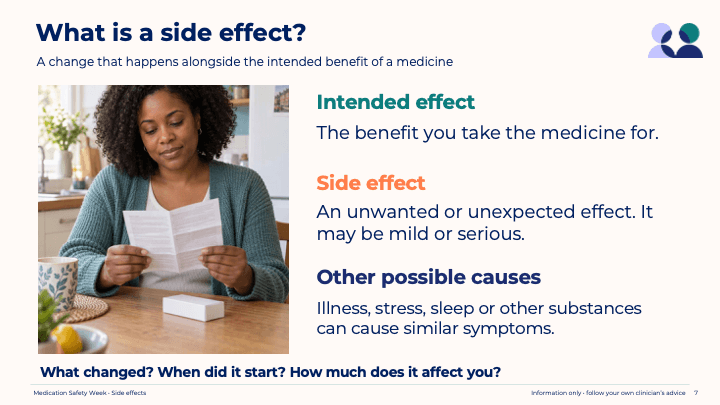
A side effect is another effect you may notice alongside the benefit you take a medicine for. Some are mild and pass quickly. Others need a closer look or medical help.
Noticing a symptom after starting a medicine does not always mean the medicine caused it. Being unwell, feeling stressed, poor sleep, alcohol, supplements and other substances can all cause similar symptoms.
Three simple questions can help you make sense of it: What changed? When did it start? How much is it affecting you?
Why can side effects happen?
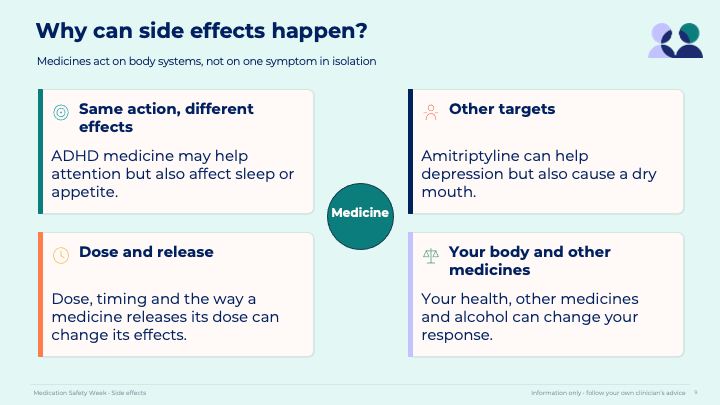
When you swallow a medicine, it passes into your bloodstream and travels around your body. This means it doesn’t only affect the part of your body where it is needed.
Side effects can happen for several reasons:
- The same action can have more than one effect. An ADHD medicine might help you focus, but also affect your appetite or sleep.
- A medicine can affect other parts of your body. For example, amitriptyline can treat depression but may also cause a dry mouth.
- Dose and timing can make a difference. Taking a stimulant too late in the day can make it harder to fall asleep.
- You are an individual. Your health, other medicines, alcohol and other substances can all affect how you respond.
None of this means you will definitely have side effects, or the same ones as someone else.
What should you look out for?
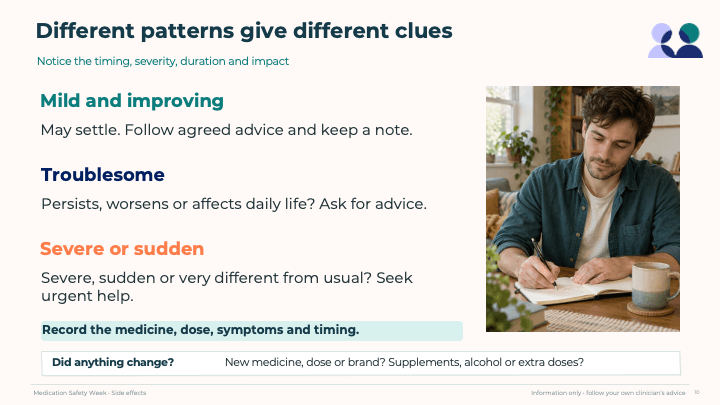
Small details can offer useful clues, such as when a symptom happens and whether it is getting better or worse.
- Mild and improving: This may settle as your body adjusts. Follow your medicine leaflet and any advice you have been given, and keep a note.
- Troublesome: If it isn’t settling, feels worse or affects your sleep, eating, work or studies, ask for advice.
- Severe or sudden: If a symptom is severe, comes on suddenly or feels very unusual, get help urgently.
It can also help to think about anything that has changed recently, such as a new medicine or supplement, a different dose or brand, alcohol, a lot of caffeine or an extra dose taken by mistake.
A simple way to respond: Pause, Check, Ask
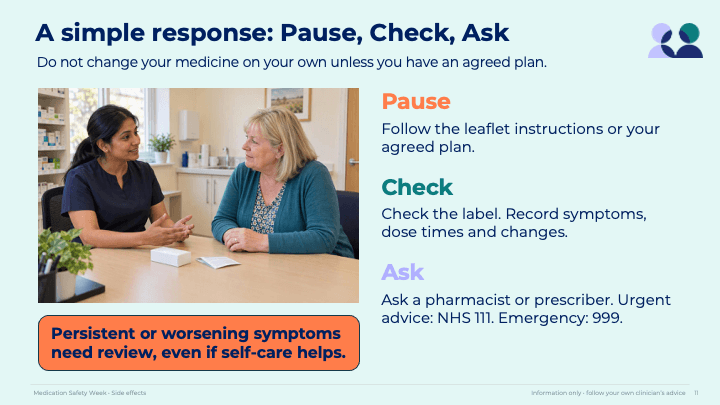
If you are wondering what to do about a possible side effect, these three words can help:
- Pause: Get advice before changing how you take your medicine. This doesn’t automatically mean you need to stop taking it. Your leaflet or treatment plan can help you work out what to do next.
- Check: Look at your label and leaflet. Make a note of your medicine, dose, when symptoms started and how they affect you.
- Ask: You don’t have to work it out on your own. A pharmacist can talk through common side effects and whether your medicines might affect each other. Your prescriber can review how you are getting on.
You don’t need to remember everything perfectly. Just take along the details you have noticed.
When should you get help?
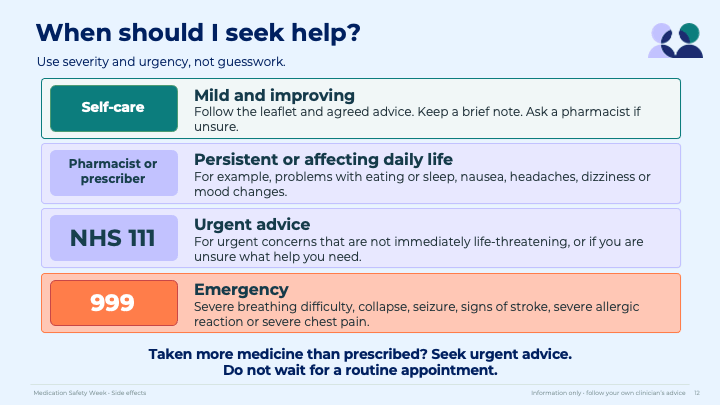
- Self-care: If symptoms are mild and getting better, your leaflet and agreed advice may be all you need. Ask a pharmacist if you are unsure.
- Pharmacist or prescriber: Get in touch if a side effect isn’t settling or is making everyday life difficult. This could include problems with eating or sleeping, feeling sick, headaches, dizziness or changes in your mood.
- NHS 111: Contact NHS 111 if you need urgent help that isn’t life-threatening, or you are unsure where to turn.
- 999: Call 999 in a medical emergency. This includes severe difficulty breathing, collapse, seizures, signs of stroke, a severe allergic reaction or severe chest pain.
If you have taken more medicine than prescribed, or think you may have, get urgent advice rather than waiting for your next appointment, even if you feel OK.
You don’t need to be sure your medicine is causing a symptom before asking for help. What matters is how you are feeling.
Reporting a side effect: the Yellow Card scheme
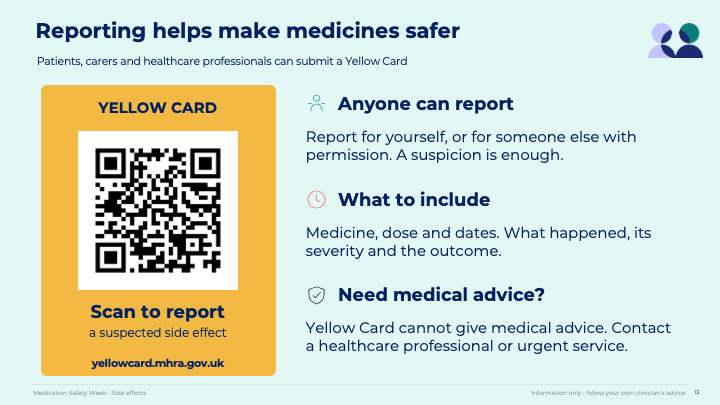
Once you have had any medical help you need, you can report a suspected side effect through the MHRA Yellow Card scheme. You can report it yourself, or a carer or healthcare professional can do this for you.
You don’t have to be certain that your medicine caused it. Your report helps the MHRA spot possible safety problems with medicines.
It helps to include the name of your medicine, your dose, when you started it, what you noticed, how much it affected you and how you are feeling now.
A Yellow Card report does not give you medical advice, so please speak to a healthcare professional if you need help with your symptoms.
How does ADHD medication work?
ADHD is a neurodevelopmental condition, which means it is something you are born with.
The front of the brain plays a big part in attention, working memory, organisation and completing tasks. It relies on chemical messengers called dopamine and noradrenaline. ADHD medication aims to increase the levels of these messengers, to help these functions work better.
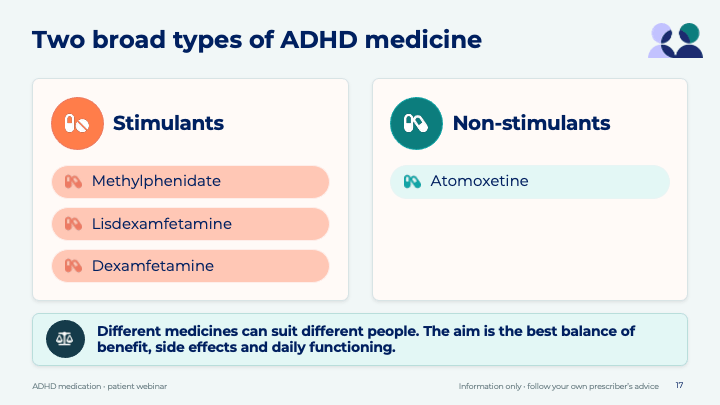
There are two broad types of ADHD medicine:
- Stimulants: Methylphenidate, lisdexamfetamine and dexamfetamine increase both dopamine and noradrenaline.
- Non-stimulants: Atomoxetine increases noradrenaline.
Different medicines suit different people. It is about finding what works best for you.
Why can ADHD medication cause side effects?
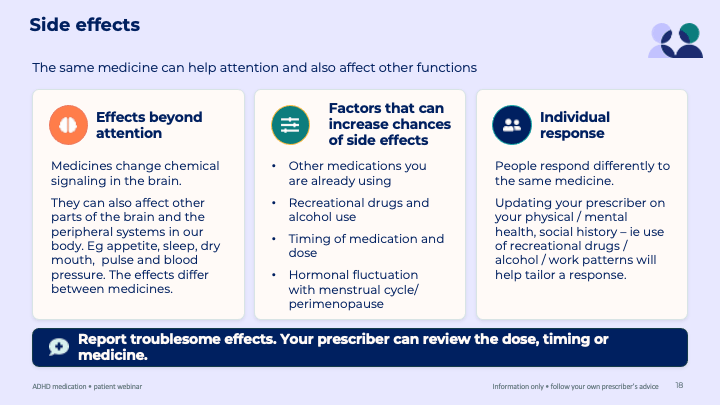
Medication can’t be directed to just one part of the brain, so it can also have effects elsewhere in the brain and body.
Your chance of side effects can also be affected by:
- Other medications you are taking.
- Alcohol or recreational drugs.
- The timing and dose of your medication.
- Hormonal changes linked to your menstrual cycle, perimenopause or menopause.
It is important to tell your prescriber about your physical and mental health, any alcohol or drug use and your work patterns. This helps them to create a treatment plan that is right for you.
Common side effects of ADHD medication
Stimulants
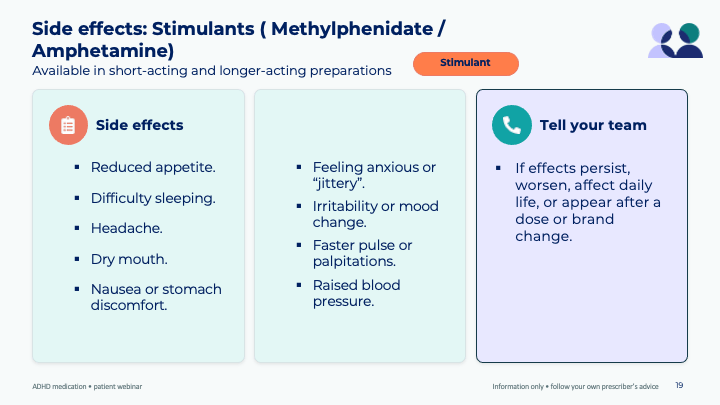
Common side effects include reduced appetite, difficulty sleeping, headaches, a dry mouth, nausea, palpitations and feeling anxious or jittery.
These can be expected in the early stages of treatment and can often be managed with some of the tips below.
Atomoxetine
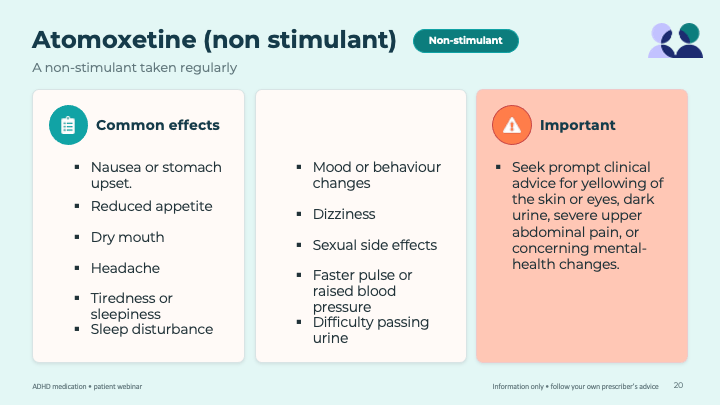
Atomoxetine has quite similar side effects, including nausea, reduced appetite, a dry mouth and headaches.
It can affect mood a little more, especially if you already have depression, so this needs to be monitored.
Please seek prompt medical advice if you notice yellowing of your skin or eyes, dark urine, severe pain in your upper tummy or concerning changes in your mental health.
Practical tips for managing side effects
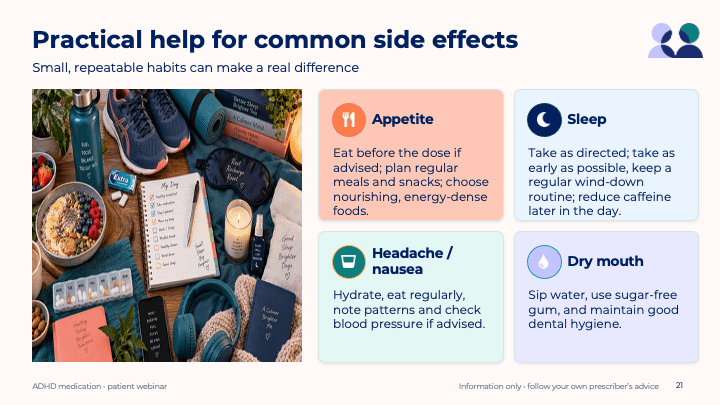
- Reduced appetite: Have a good, high-protein meal with your medication and set timers for meals and snacks. Tell your prescriber about any weight loss.
- Difficulty sleeping: Take your medication as early as you can, as directed, so that it wears off before bedtime. Keep a good sleep routine and cut down on caffeine later in the day.
- Headaches: Eat regularly and drink plenty of water. If headaches continue, check your blood pressure and seek medical advice.
- Dry mouth: Drink plenty of water and try sugar-free gum. A pharmacist can suggest lozenges, and a dentist or hygienist can check for any dental problems.
- Palpitations: Check whether caffeine, alcohol or the timing of your medication could be playing a part, and try to exercise away from the time you take it. Check your pulse and blood pressure, keep a diary and tell your prescriber if they continue.
- Feeling anxious or jittery: Limit coffee, tea and cola, and try slow breathing or a short walk.
If you have palpitations with chest pain, fainting or breathlessness, get urgent help. Call NHS 111, or 999 if you think it is an emergency.
A simple diary of your doses, symptoms and how you are feeling can be really helpful, and it is a good idea to write down any questions for your next review.
What if you can’t tolerate your medication?
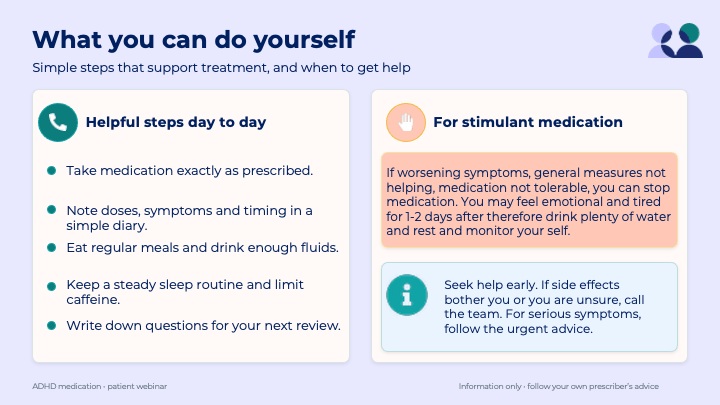
If a side effect is hard to live with, or the tips above aren’t helping, please contact your prescriber. If you can’t reach them because it is out of hours, NHS 111 can help.
Dr Warna explained that with stimulant medication, you can stop taking it if you are not tolerating the side effects. Stimulants are taken in the morning and wear off by the evening, so you are unlikely to get withdrawal symptoms.
If you have been taking your medication for a long time, your ADHD symptoms may come back when you stop, and you might feel tired and emotional for a day or two. Drink plenty of water, rest and let your prescriber know.
Atomoxetine should not be stopped suddenly without advice.
Two examples of how side effects can be managed
Naseera shared two case studies, using fictional names, based on typical experiences that patients may have while taking ADHD medication.
Sarah: when sleep becomes difficult
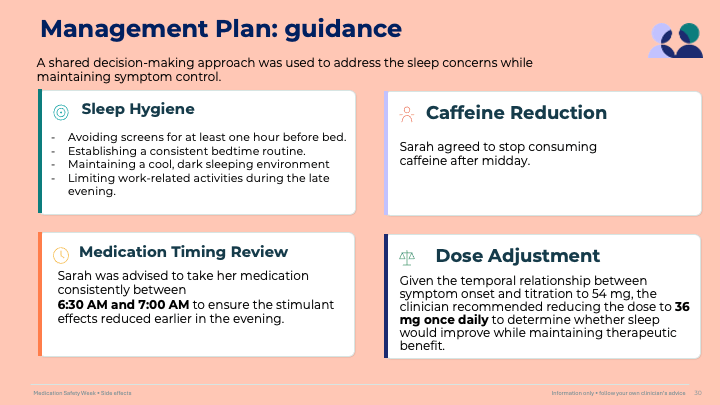
Sarah’s methylphenidate was really helping her ADHD symptoms, but after her dose increased she began to struggle with sleep. She was often awake until 1 or 2am and felt tired during the day.
Together, Sarah and her prescriber noticed that a 3pm coffee and working on her laptop late into the evening could be playing a part. Her dose might also have been higher than she needed.
They agreed a plan, which included:
- No caffeine after midday.
- Avoiding screens for at least an hour before bed.
- Keeping to a consistent bedtime routine in a cool, dark room.
- Taking her medication a little earlier in the morning.
- Reducing her dose.
- Keeping a sleep diary to help spot patterns.
Sarah began falling asleep between 11pm and midnight, and her sleep increased from around five hours to seven. Her daytime tiredness improved, and she felt she had found a better balance.
Christopher: when appetite drops
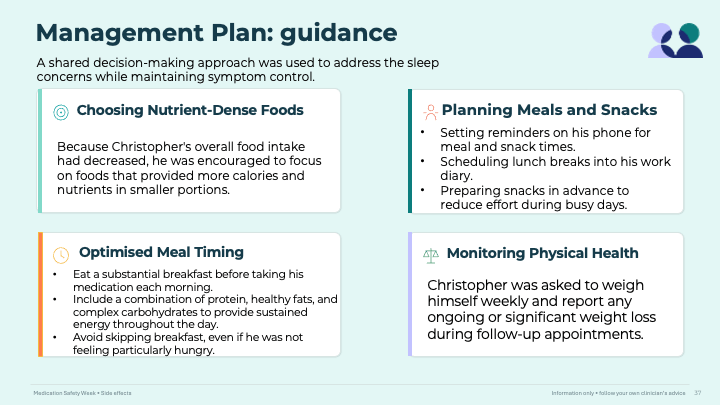
Christopher’s medication helped him to focus and get things done, but he began to lose his appetite and forget to eat. He lost around 3kg in four weeks and sometimes felt lightheaded in the afternoon.
With his prescriber, he agreed to try:
- Having a substantial breakfast with protein, healthy fats and complex carbohydrates.
- Setting phone reminders for meals and snacks.
- Preparing snacks in advance.
- Choosing foods that provide more nutrients in smaller portions, such as eggs on wholemeal toast, Greek yoghurt or porridge.
- Weighing himself weekly and reporting any ongoing weight loss.
At his next review, his weight had stabilised, his energy had improved and he felt less lightheaded.
Both examples show why regular reviews and open conversations with your prescriber are so important.
When medication isn’t the right fit: Nikki’s story
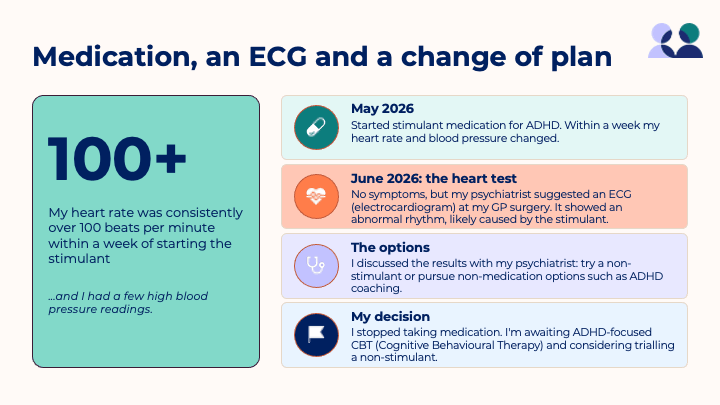
Nikki was treated for anxiety and depression for more than 20 years. Medicines would help for a while and then stop working, and she experienced repeated burnout.
When she saw a psychiatrist to review her diagnosis, she was told she had significant traits of ADHD and autism. She went on to be diagnosed with combined type ADHD in March 2026.
Within a week of starting a stimulant, Nikki found that her heart rate was consistently above 100 beats per minute, and she had a few high blood pressure readings. She had no symptoms, and only noticed because she was checking regularly.
Her psychiatrist suggested an ECG (a heart test), which showed an abnormal rhythm, likely caused by the stimulant.
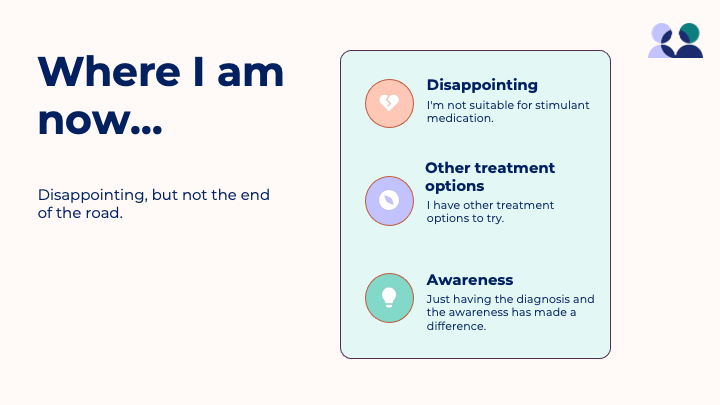
After discussing the options with her psychiatrist, Nikki decided to stop taking medication. She is now waiting for ADHD-focused cognitive behavioural therapy and is considering trying a non-stimulant.
Although this was disappointing, Nikki said that simply having the diagnosis and understanding her ADHD has made a big difference.
Her message to others was: if you can’t take medication or you get side effects, there are always other options to try.
Further information and support
Please contact our Patient Support team through Live Chat or by calling 0330 124 1980 (Monday to Friday, 8am-6pm).
- NHS 111 – Urgent medical advice.
- MHRA Yellow Card scheme – Report a suspected side effect.
- Living Well with ADHD workbook – Our practical workbook for living with ADHD.
Working together to find what’s right for you
One of the strongest messages from the webinar was that everyone responds to medication differently.
Finding the right treatment can take time, and it is about getting the best balance between the benefits and any side effects.
You know how you are feeling from day to day. Sharing what you notice helps you and your healthcare team work out what is right for you.
Questions and practical tips from the webinar
The webinar ended with lots of questions from attendees. Here is what our panel had to say.
Can I keep taking supplements when I start ADHD medication?
Dr Sam Spavin, Clinical Director for ADHD Assessment and Ongoing Care, explained that it is relatively safe to continue most supplements with ADHD medication, but there is no blanket answer. For example, St John’s Wort often interacts with these medicines, so she would advise against taking it alongside them.
The safest thing is to always tell your prescriber about any supplements you take.
Should I start titration if I am planning a pregnancy?
Dr Warna explained that we don’t recommend starting titration during pregnancy, because pregnancy changes how your body works and we can’t be sure how the medication will affect you or your baby.
If you are planning a pregnancy soon, she suggested postponing titration until you have had your baby and finished breastfeeding. If you are already on our waiting list for titration, we can expedite your referral once you are re-referred after this time.
How can I manage medication if I work shifts?
This is a common question, and we can create a treatment plan to suit your shift pattern. Please tell your prescriber about your shifts, including how often they change.
What if I have another health condition, such as Parkinson’s?
For more complex situations, we would take an individual approach and seek advice from a specialist, such as a neurologist. Our physical health team can also advise. ADHD medication may or may not be suitable, depending on your situation.
If one stimulant causes side effects, could another suit me better?
All stimulants can cause similar side effects, but they work slightly differently. Naseera explained that some people experience more significant side effects on one stimulant than on another, so it can be worth trying a different one with your prescriber’s support.
Do I have to wake up early to take my medication?
If you work standard hours, it is generally best to take your medication as early as you can, as this can help with sleep. Dr Warna added that medication can also reduce overwhelm and stress, so your sleep and mornings may improve.
Can I take my medication if I don’t have time for breakfast?
You can, but taking it without food may make side effects such as nausea or reduced appetite more likely. Having some food as a buffer can help, so talk to your prescriber if this is difficult.
What if I don’t settle on a medication during titration?
Dr Warna explained that it is generally better not to keep trying different medications one after another. We usually suggest trying a couple of medications, followed by non-medication approaches. You can then be re-referred if you would like to try another option.
Is one ADHD medication better if I have IBS?
There is no way of knowing until you have tried it, as people with the same condition can respond differently. Keep a symptom diary and discuss any worries with your prescriber.
Do I need to stop drinking alcohol?
Dr Warna explained that you don’t necessarily need to stop, but it depends on how much you drink. Alcohol is best kept to the evening, once your medication has worn off, and within the UK guideline of no more than 14 units a week, spread over three days or more.
If you are going to an event and expect to drink more, the advice is not to take your stimulant medication that day, and to miss the next day’s dose too if you still feel the effects of the alcohol.
Will ADHD medication affect me differently if I am autistic?
Liam, one of our Titration team leads, explained that autism and ADHD can sometimes seem to balance each other out. When ADHD is treated, some autistic traits may feel stronger or more noticeable. You may see autism described as ASD in your assessment report.
It can also be harder to spot improvements in ADHD symptoms, as the two conditions can overlap.
What if my medication wears off quickly or affects my exercise?
If side effects or the way your medication works are affecting your lifestyle, speak to your prescriber. There are always options to discuss, including trying a different medication.
Do stimulant medications increase cortisol?
Dr Warna explained that ADHD medication can increase cortisol, which is one of the body’s stress hormones, particularly if you already have difficulties with sleep. Your prescriber can help you find a dose and treatment plan that works for you.
Would a non-stimulant be better if I have POTS?
Not necessarily. Stimulants can be used if you have POTS, as long as your pulse rate is monitored and stays within a normal range. A non-stimulant may be recommended if your pulse isn’t controlled.
What happens if my GP won’t agree to shared care?
Gerry, one of our Titration team leads, explained that we would continue to prescribe through our Continuing Care team and provide annual reviews, so there would be no break in your prescriptions.
Did we miss your question?
There were so many great questions that we couldn’t answer them all during the webinar. Our clinical team has answered the rest of your questions from the chat on our ADHD medication page.
Missed the webinar? You can watch the full recording on the Psychiatry UK YouTube channel:
References
- MHRA. The Yellow Card scheme: guidance for healthcare professionals, patients and the public. gov.uk.
- NHS. Drink less. nhs.uk.
- NHS. Side effects of methylphenidate for adults. nhs.uk.
- NICE (2018, updated 2019). Attention deficit hyperactivity disorder: diagnosis and management (NG87). nice.org.uk.
This article provides general information and is not a substitute for individual medical advice. Please speak to your prescriber, pharmacist or GP about symptoms, medication or treatment decisions.

Leave A Comment