

An overview of our patient webinar, ‘Summer Holidays Made Easier for Neurodivergent Families’, held on 15 July 2026.
Holidays aren’t always the exciting adventure we are told they should be. For neurodivergent families, they can bring extra challenges as well as lots of joy.
If that sounds familiar, you are not alone.
In our recent patient webinar, Dr Yasmine Weeks, Specialist GP in ADHD and Physical Health, and Beverley Nolker, Neurodiversity Education and Engagement Manager and ADHD Coach, shared ideas to help families through the holidays, both at home and abroad. Both are neurodivergent themselves and have neurodivergent children.
Their aim wasn’t to set unreasonable benchmarks, but to offer suggestions that can help both parents and children have a good experience. This article brings together the key information and practical tips from the session.
Key takeaways
- Holidays can mean a break from predictability. The routines that help children feel safe and regulated can suddenly disappear.
- Remember PACE. Predictability, autonomy, connection and energy are four needs that can help children thrive during the holidays.
- Look for the need behind the behaviour. Gaming, late nights and not joining in often serve a purpose for teenagers.
- Preparation reduces uncertainty. Talking through what to expect, and packing a regulation kit, can make going away feel more manageable.
- The aim isn’t a perfect holiday. The aim is to recover well when things don’t go to plan.
Why can holidays be so challenging?
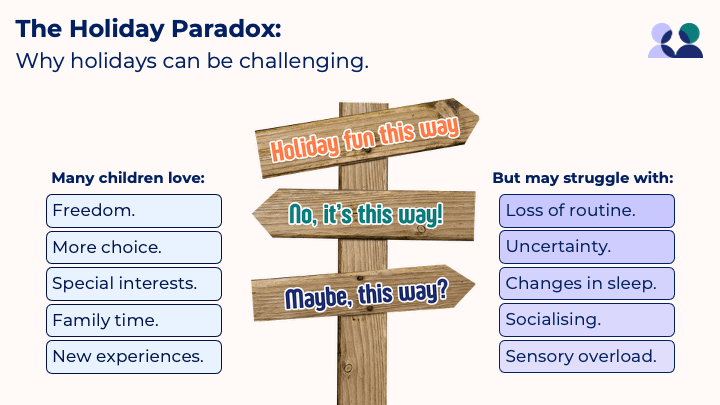
Many people think of holidays as a break from stress. But for neurodivergent children, they can often mean a break from predictability.
- Many children love: Freedom, more choice, special interests, family time and new experiences.
- But they may struggle with: Loss of routine, uncertainty, changes in sleep, increased social demands and sensory overload.
School holidays can amplify these difficulties. But they also offer a valuable opportunity to slow down, reconnect and build a holiday around your child’s strengths and needs.
PACE: the four holiday needs
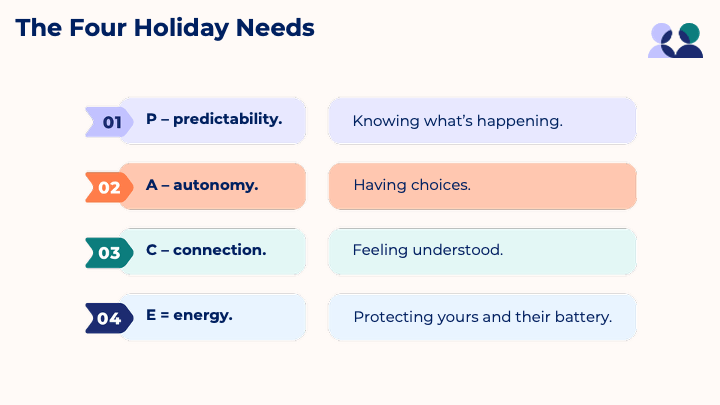
The PACE model sets out four core needs that can help neurodivergent children thrive during the holidays. They are underpinned by self-determination theory, which suggests that people are naturally motivated when they feel a sense of choice, capability and connection.
Every family and every person is different, so take what is helpful for you.
P is for predictability: ‘Help me know what to expect’
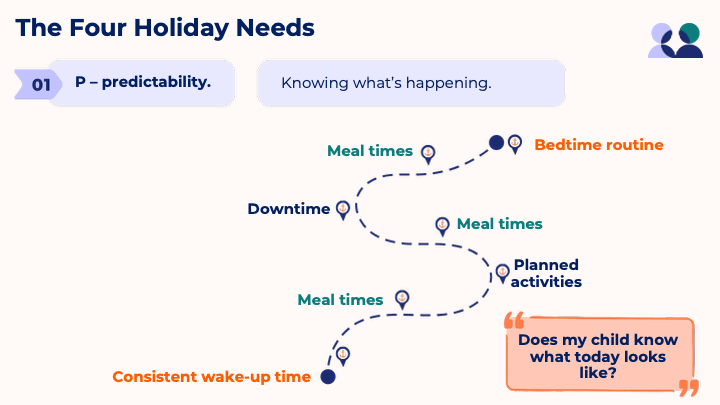
School naturally provides timetables, familiar routines, clear expectations and predictable transitions. Without this structure, some children may experience more anxiety, emotional dysregulation, difficulty moving between activities and disrupted sleep.
Predictability doesn’t mean rigid schedules. Instead, try creating anchor points in the day, and let everything else flex around them:
- A consistent wake-up time.
- Meal times.
- Activities you have planned together.
- Downtime.
- A bedtime routine.
A visual calendar or whiteboard can also help children to see what is coming next. It can help to ask yourself: “Does my child know what today looks like?”
A is for autonomy: ‘Include me in the decision-making’
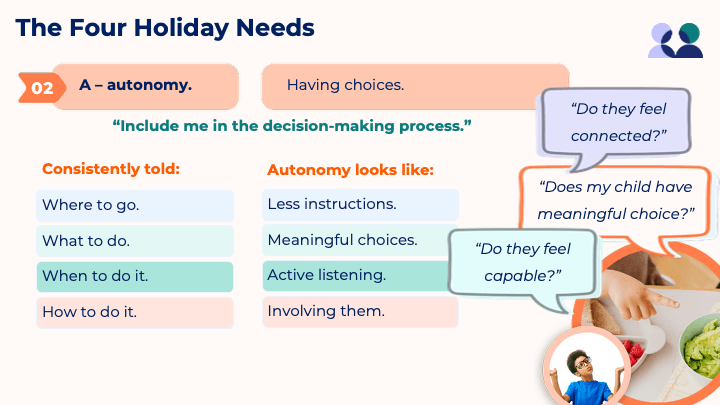
Many neurodivergent children spend much of the year being told where to go, what to do, and when and how to do it. The holidays are a chance to restore the balance.
Autonomy can look like fewer instructions, meaningful choices, active listening and involving your child in decisions.
Rather than filling every day with activities, try asking yourself: ‘Does my child have some choice? Do they feel capable? Do they feel connected?’
C is for connection: ‘Help me feel understood’
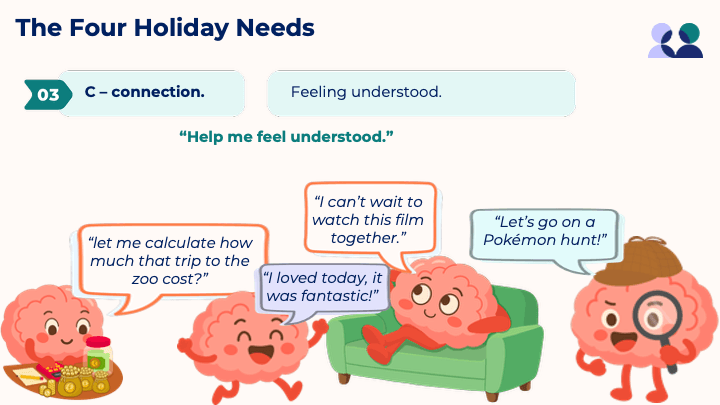
The most memorable holidays aren’t always the busiest. Children rarely remember how much a day out cost or how many activities they did. They do remember how people made them feel, being listened to, shared laughter and feeling accepted.
Connection can be found in small moments, such as:
- Cooking a family meal.
- Walking the dog together.
- Asking about their special interests and what they can teach you.
- Watching a film.
- Sitting quietly alongside them.
E is for energy: ‘Help me protect my battery’
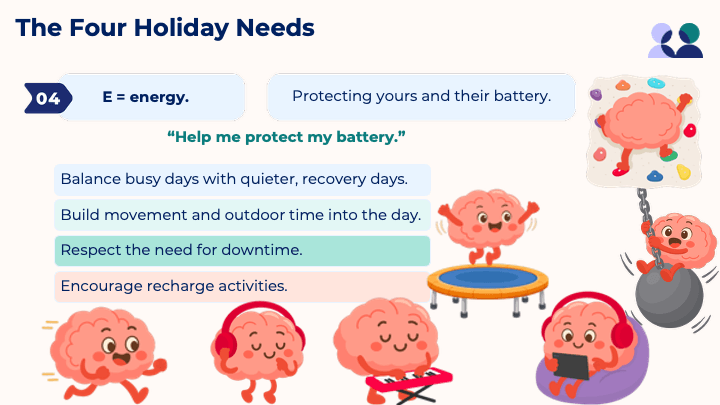
Neurodivergent children often use a great deal of energy managing sensory input, emotions and social situations. To help protect their battery, and yours, try to:
- Balance busy days with quieter recovery days.
- Build movement and outdoor time into the day.
- Respect the need for downtime after stimulating activities.
- Encourage activities that help your child to recharge.
Some children recharge by being alone, gaming, reading or focusing on special interests. Others recharge through movement, talking or being outdoors.
Ask yourself: ‘Is this activity filling my child’s battery or draining it?’ And remember, rest is productive.
The teenage years: what’s really going on?
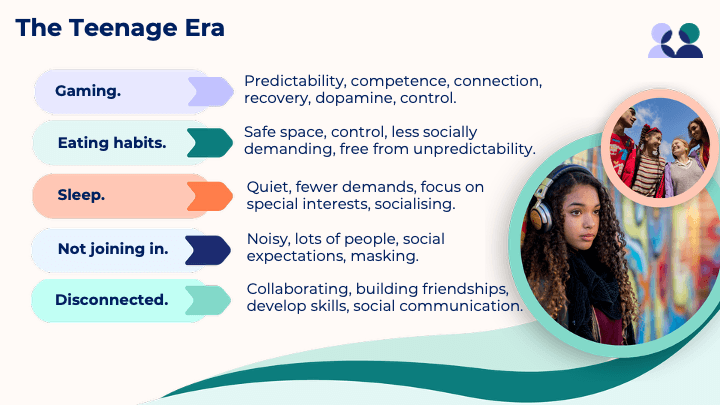
Many of these behaviours are common in all teenagers, but they can be more noticeable in neurodivergent teenagers. It can help to look at what each one might be doing for them.
‘They’re always gaming!’
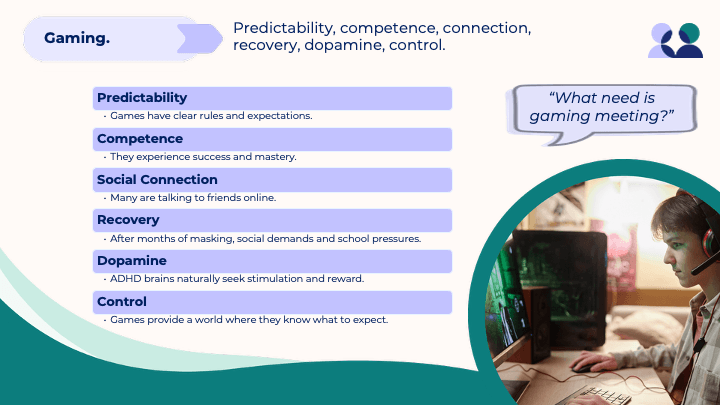
Gaming has a place, with healthy boundaries. Before asking how to reduce it, try asking: ‘What need is gaming meeting?’ It may provide:
- Predictability: Games have clear rules and expectations.
- Competence: Teenagers experience success and mastery.
- Social connection: Many are talking to friends online.
- Recovery: It can be a break after months of masking and school pressures.
- Dopamine: ADHD brains naturally seek stimulation and reward.
- Control: Games offer a world where they know what to expect.
Gaming can be used as a consistent anchor point in the day. Try to agree together on clear boundaries for when and how long, and avoid removing it as a punishment.
‘They only come out for food!’
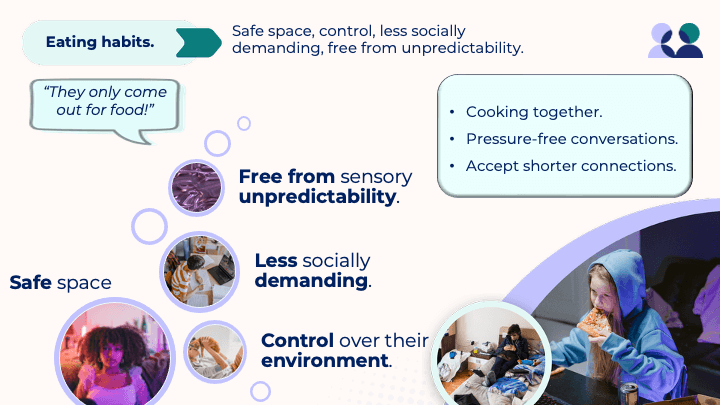
A teenager’s bedroom often becomes a safe space where they have control. It may be quieter, less socially demanding and more predictable than the rest of the house. Food can be a natural opportunity for connection.
It may help to:
- Invite them to help cook, rather than simply calling them for dinner.
- Make something you know they will eat.
- Keep mealtime chat relaxed, with conversation rather than questioning.
- Accept that connection may come in short bursts.
Coming downstairs for ten minutes is still connection.
‘They stay up all night!’
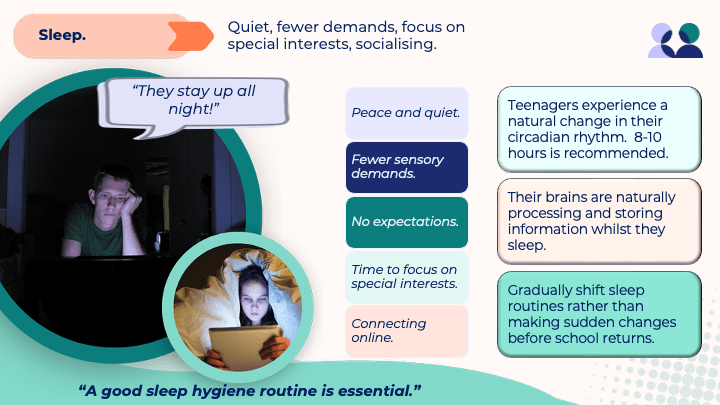
Teenagers experience a natural change in their body clock, which can make it harder to fall asleep before 11pm. Many neurodivergent teenagers don’t feel sleepy until later still. They need 8 to 10 hours of sleep a night.
Late evenings can also offer peace and quiet, fewer sensory demands and time for special interests or chatting with friends online. So it can help to think about what needs the night-time routine is meeting.
It may help to:
- Stay flexible, while keeping a consistent wake-up time where possible.
- Encourage daylight and movement earlier in the day.
- Avoid screens for an hour before bed.
- Build in a calming ritual, such as a shower, skincare, a book or an audiobook.
- Make the bedroom a relaxing space together.
- Shift sleep routines gradually before school returns, rather than making sudden changes.
‘They don’t want to join in!’
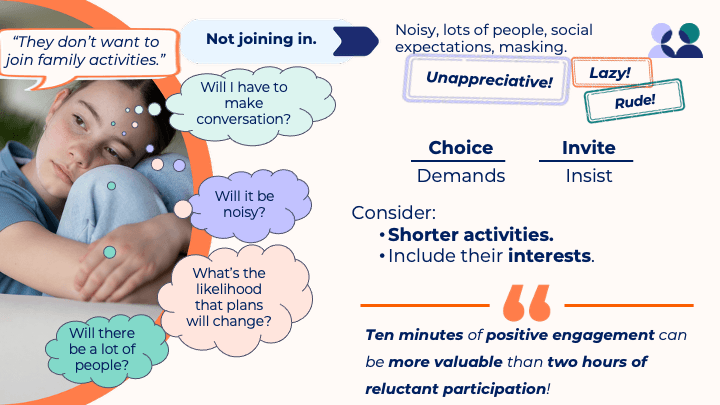
This can look like laziness or rudeness. In reality, your teenager may be weighing up the emotional and sensory cost of taking part. Will it be noisy? Will there be lots of people? Will plans change? Will I have to make conversation?
Sometimes the answer is simply, ‘I don’t have enough energy today.’ That doesn’t mean they don’t value family time.
Try offering choices rather than demands, inviting rather than insisting, keeping activities short and including their interests. Ten minutes of positive engagement can be more valuable than two hours of reluctant participation.
‘They seem disconnected from the real world!’
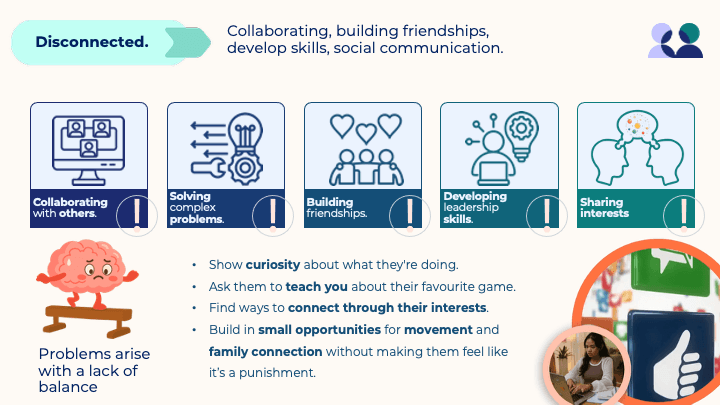
Gaming, YouTube, Discord and online communities can look isolating from the outside, but they can offer genuine opportunities for learning, friendship and belonging.
Concerns arise when the online world completely replaces movement, face-to-face relationships, sleep, nutrition and everyday responsibilities.
Rather than asking, ‘How do I get them off the computer?’, try asking, ‘How do I help them build a balanced life that includes the things they enjoy?’ It may help to:
- Show curiosity about what they are doing.
- Ask them to teach you about their favourite game.
- Find ways to connect through their interests.
- Build in small opportunities for movement and family time, without making them feel like a punishment.
Going away: planning for success
For many neurodivergent children, anxiety comes from uncertainty rather than the holiday itself. Preparation reduces uncertainty, and reducing uncertainty often reduces anxiety.
Prepare your family early
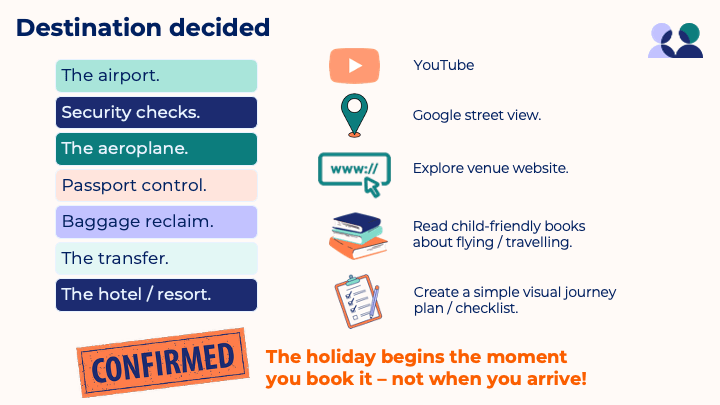
Before you book, think about what kind of holiday will work best for your family, including the destination, transport and accommodation. Plan around your family, rather than society’s expectations.
Then talk early about what the journey may look like and anything your child may be worried about. You could:
- Watch videos of the airport or destination on YouTube.
- Explore the area on Google Street View.
- Look at the venue’s website.
- Read child-friendly books about flying or travelling.
- Create a simple visual journey plan or checklist.
Manage expectations
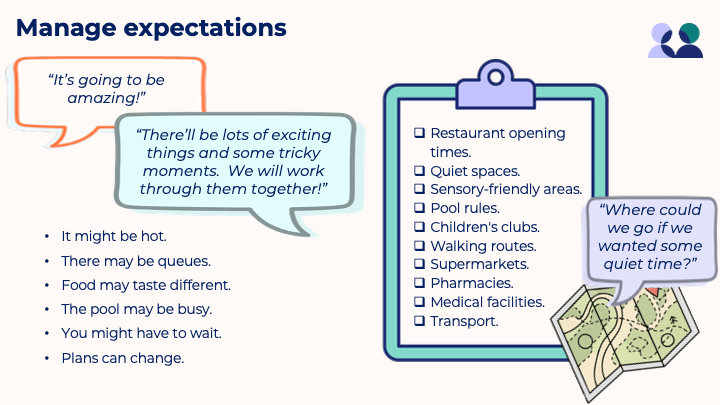
Rather than saying ‘It’s going to be amazing!’, try: ‘There’ll be lots of exciting things and some tricky moments. We will work through them together!’
It can help to talk about the fact that it might be hot, there may be queues, food may taste different and plans can change.
As soon as you can, find out about restaurant opening times, quiet and sensory-friendly areas, pool rules, children’s clubs, walking routes, supermarkets, pharmacies, medical facilities and transport. A simple map can show where to go if your child needs some space.
Pack a regulation kit
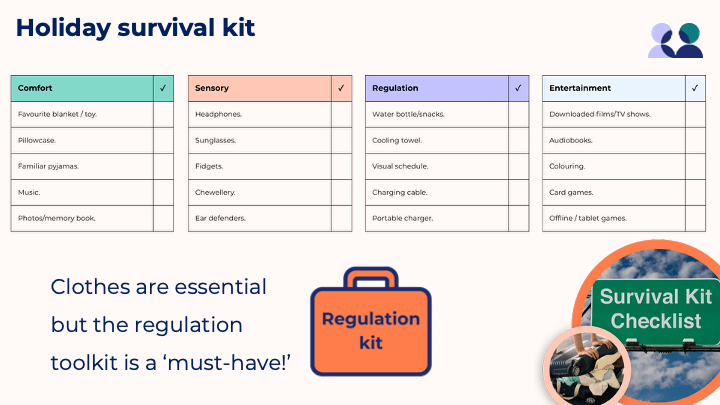
Clothes are essential, but a regulation kit is a must-have too. This is a collection of familiar items that help your child to feel calm and safe. Every child’s kit will look different, but it might include:
- Comfort: A favourite teddy, blanket, pillowcase or familiar pyjamas.
- Sensory: Headphones, sunglasses, fidget toys, chew tools or ear defenders.
- Regulation: Favourite snacks, a water bottle, a cooling towel, a visual schedule and chargers.
- Entertainment: Downloaded films, audiobooks, colouring, card games or a tablet with offline games.
Think about what usually helps your child to recover at home, and how you could recreate that while you are away.
Have a Plan B
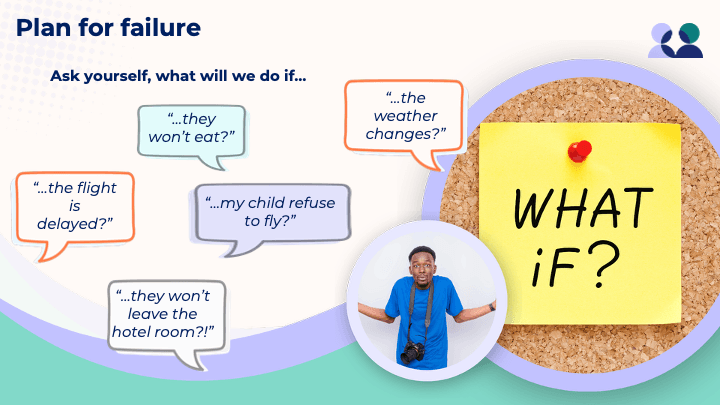
It is rare for a holiday to go perfectly. Flights get delayed, pools close, children become overwhelmed and parents get tired.
Try asking yourself, ‘What will we do if…’
- The flight is delayed.
- My child refuses to fly.
- They won’t eat.
- They won’t leave the hotel room.
- The weather changes.
- Someone becomes overwhelmed.
Psychologists call this ‘if-then planning’. Research shows that thinking through what you will do if something happens can reduce anxiety and make it easier to respond calmly. Having a Plan B often means you never need it.
When things aren’t going well: the holiday reset
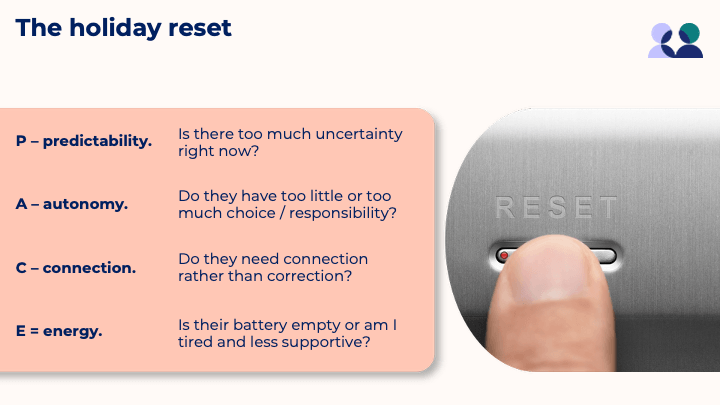
If things aren’t going to plan, stop, don’t force it and adjust your expectations. You can still have a good experience, even with challenges. Going back to PACE can help you to reset:
- Predictability: Check whether there is too much uncertainty right now.
- Autonomy: Consider whether they have too little or too much choice.
- Connection: Think about whether they need connection rather than correction.
- Energy: Notice whether their battery is empty, or whether you are tired and less able to support them.
You know your child best, so trust yourself to answer these questions.
Further information and support
Please contact our patient support team through Live Chat or by calling 0330 124 1980 (Monday to Friday, 8am-6pm).
The best souvenirs
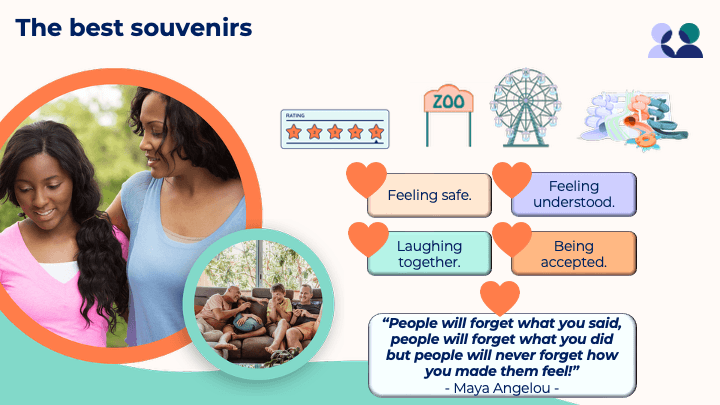
Your child probably won’t remember the hotel’s star rating, or whether you visited every attraction.
They are much more likely to remember feeling safe, feeling understood, laughing together, being accepted for who they are and knowing they had someone beside them when things became difficult.
The aim isn’t a perfect holiday. It is a holiday that works for your family.
Missed the webinar? You can watch the full recording on the Psychiatry UK YouTube channel:
References
- Gollwitzer PM (1999). Implementation intentions: strong effects of simple plans. American Psychologist, 54(7), 493-503. doi.org/10.1037/0003-066X.54.7.493.
- Paruthi S, Brooks LJ, D’Ambrosio C, et al. (2016). Recommended amount of sleep for pediatric populations. Journal of Clinical Sleep Medicine, 12(6), 785-786. doi.org/10.5664/jcsm.5866.
- Ryan RM, Deci EL (2000). Self-determination theory and the facilitation of intrinsic motivation, social development, and well-being. American Psychologist, 55(1), 68-78. doi.org/10.1037/0003-066X.55.1.68.
This article provides general information and is not a substitute for individual medical advice. Please speak to your GP or treating clinician about any concerns about your child’s health or wellbeing.

Leave A Comment