

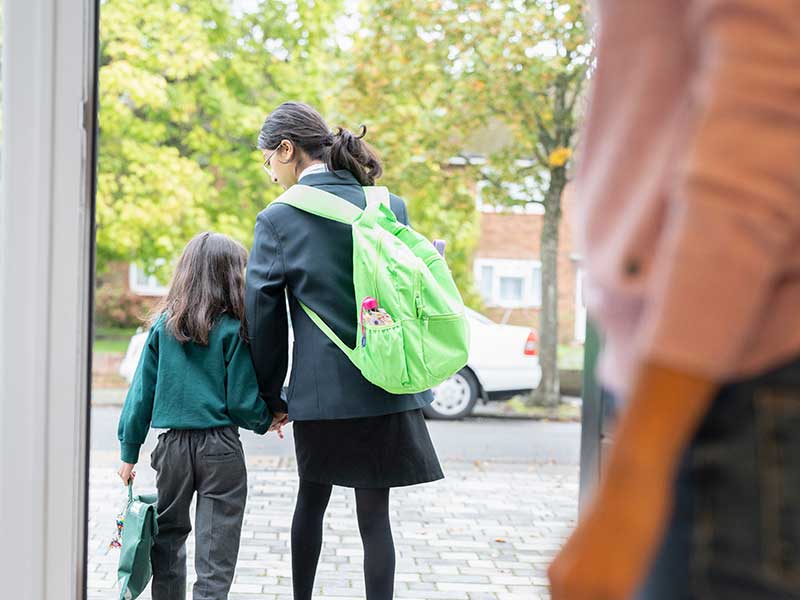
Helping your child start nursery, begin school or move to a new setting
New shoes have been bought. Jumpers have been labelled. Somewhere, a water bottle is already missing its lid.
Starting nursery or school is a big moment for the whole family. Your child may feel excited, nervous or both — and you may feel much the same.
Watching them spread their wings can bring pride alongside sadness and uncertainty. When your child is neurodivergent, you may also wonder whether new staff will understand how they communicate and know what helps them feel safe.
Children moving to a different school may be leaving familiar adults and routines, entering a busier environment or travelling by bus or taxi for the first time.
You may not be able to remove every worry, but you can make the unknown feel more familiar.
Find out what your child needs to know
Adults often say: “You’ll have a lovely time” or “You’ll make lots of friends.”
Your child may be thinking about more practical questions:
- Who will take me there?
- Where will my things go?
- Who can I ask for help?
- How will I know when it’s time to go home?
Give clear, simple answers where you can. When you do not know something, say that you will find out.
Photos of the entrance, classroom, staff and key places can make the setting feel more predictable. A picture sequence or visual timetable may also help.
Visit and practise
Ask whether you can visit together before the first day. A busy open day may suit some children; others may manage better during a quieter visit.
Focus on finding the classroom and toilets, meeting a key member of staff, and seeing where you will say goodbye and meet again.
You do not need to rehearse everything. The aim is to reduce the number of completely new experiences your child faces at once.
Ease back into a routine
Moving from flexible summer days to early starts can be a shock for the whole household.
During the week or two before term, gradually adjust bedtime and wake-up time. You could also practise getting dressed, eating breakfast and making the journey.
Put essential items in the same place each evening. A short visual checklist can reduce the spoken instructions your child needs to remember:
- Get dressed.
- Eat breakfast.
- Brush teeth.
- Shoes, coat and bag.
The routine is there to help. It doesn’t have to work perfectly every day.
Help staff understand your child
Your child should not have to arrive as a mystery for staff to solve.
Before they start, share information about:
- Their strengths and interests.
- How they communicate.
- Sensory, food, toileting or medical needs.
- Signs that they are becoming overwhelmed.
- What usually helps them feel calmer.
Specific examples are useful. Instead of saying, “Sam struggles with noise,” you could explain:
“When the room becomes very noisy, Sam may stop speaking or try to leave. A quiet space and a few minutes without questions usually help.”
Ask who your child can approach when they need support. You may also wish to speak to the nursery or school’s special educational needs coordinator, usually known as the SENCO, about support and reasonable adjustments.
Prepare for the journey too
For some children, the journey may feel as unfamiliar as the classroom.
A bus, taxi or longer route can bring new people, sounds, smells and delays. Your child may also be travelling without you for the first time.
Where possible, practise the route, show them where they will wait and explain who will travel with them. Photos of the vehicle or collection point may help. A familiar object or sensory aid can also make the journey feel safer.
A simple sequence can make the plan clearer:
Home → bus or taxi → school entrance → classroom
Share essential information with the driver or passenger assistant, especially if their distress may not be obvious.
Make space for recovery
A new setting can require a great deal of concentration, communication and sensory processing.
Your child may come home full of stories. They may also be quiet, tearful, irritable or exhausted.
Keep the first part of the evening low-demand. Offer food, water and a familiar activity before asking lots of questions.
Instead of “How was school?”, try:
- “What felt easy today?”
- “Was anything confusing?”
- “Who helped you?”
- “Would you like to tell me now or later?”
A difficult evening does not necessarily mean the day went badly. Your child may simply be releasing feelings they worked hard to manage while away from home.
Notice when worry needs more support
Young children may not always have the words to explain anxiety. You may notice clinginess, angry outbursts, sleep problems, stomach aches, changes in eating or reluctance to leave home.
Listen without dismissing their concerns or promising that everything will be fine. Speak to the setting so you can work together to understand what feels difficult and what may help.
Seek further advice if anxiety is becoming stronger, continues over time or is significantly affecting daily life.
Look after yourself too
You may feel proud, relieved, worried or unexpectedly emotional when you hand your child over. All these feelings can exist together.
Make a gentle plan for the first day. Speak to someone you trust, take a walk or arrange something after drop-off. Agree when the setting is likely to update you, so you are not left checking your phone repeatedly.
This is a transition for you too.
A good start does not have to be perfect
There may be tears at the door, forgotten bags and mornings when the routine goes off course.
Settling in takes time. Success may mean your child recognises the route, knows which adult can help or discovers one part of the day that feels safe.
Prepare what you can, stay in conversation with the setting and take the transition one day at a time. Familiarity often grows slowly — and small steps still count.









Leave A Comment